
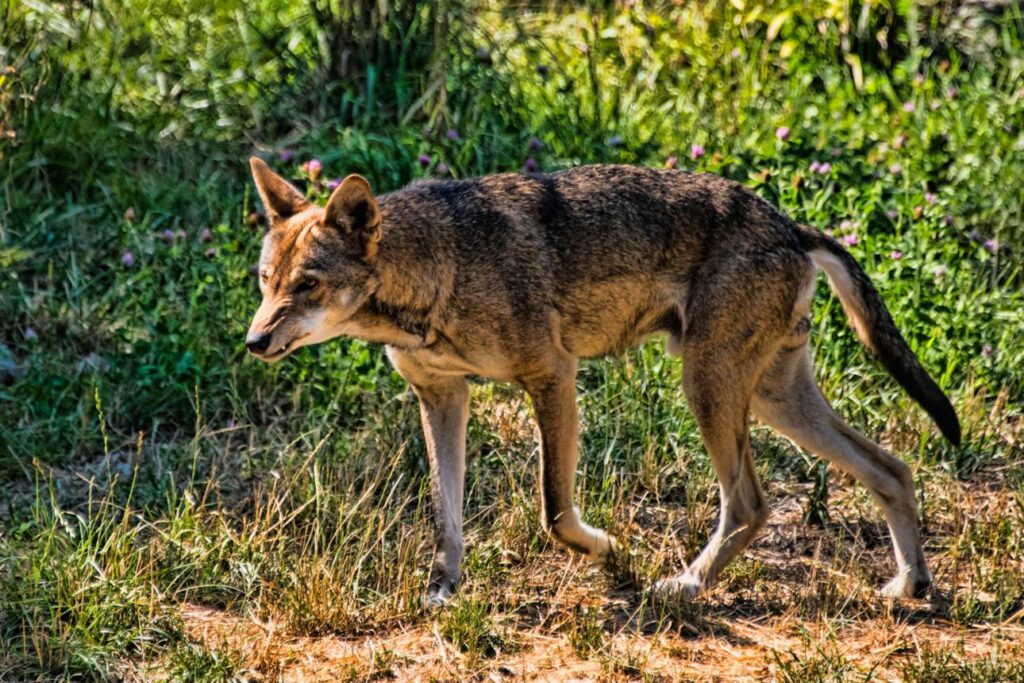
Texas ‘Ghost Wolves’ May Hold the Secret to Saving One of America’s Rarest Predators

Most Texans probably have no idea they exist.
They move quietly through remote stretches of coastal marsh, thick brush, and forgotten pockets of Gulf Coast habitat looking much like oversized coyotes to the untrained eye. Hunters occasionally spot them. Trail cameras sometimes catch them slipping through the darkness. Wildlife researchers, however, believe these mysterious animals may be carrying something far more important than anyone realized.
They call them “ghost wolves.”
And according to scientists, they could unexpectedly shape the future of one of the rarest predators in North America.
The surprising discovery centers around wild canids living along the Texas and Louisiana Gulf Coast that appear to carry hidden genetic traces of the nearly extinct red wolf. For decades, many experts believed the original red wolf had effectively disappeared from the wild after aggressive predator control campaigns, habitat loss, and hybridization pushed populations to collapse across the southeastern United States.
Now researchers believe pieces of the species may have quietly survived in Texas all along.
That possibility has reopened one of the most fascinating wildlife debates in America.
What Exactly Are Texas “Ghost Wolves”?
The term “ghost wolf” refers to wild canids that outwardly resemble coyotes but reportedly carry dormant red wolf ancestry hidden inside their DNA.
According to researchers studying Gulf Coast canid populations, animals living in parts of Texas and Louisiana may preserve genetic material from historical red wolves that survived after official populations collapsed. Scientists believe isolated breeding over decades allowed portions of that genetic history to quietly persist in wild animals many people simply assumed were ordinary coyotes. According to research published through Princeton University and conservation scientists, some Gulf Coast canids reportedly contain unusually high concentrations of red wolf ancestry. (science.org)
That discovery surprised many biologists.
Because for years, the assumption remained simple:
The original red wolf lineage had largely vanished.
Now researchers increasingly believe Texas may still hold pieces of it.
Why the Red Wolf Matters So Much
The red wolf remains one of the rarest wolves on earth.
According to the U.S. Fish and Wildlife Service, fewer than two dozen known wild red wolves currently survive in northeastern North Carolina, making them among the most endangered mammals in North America. After near-extinction in the wild during the 20th century, wildlife officials launched captive breeding programs in hopes of preventing the species from disappearing completely. (fws.gov)
For decades, recovery efforts faced enormous challenges.
Habitat loss, low genetic diversity, political opposition, hybridization with coyotes, and shrinking populations repeatedly complicated attempts to rebuild stable wild packs. Scientists increasingly worried that such a small remaining population risked long-term genetic bottlenecks capable of weakening recovery prospects.
That concern partly explains why Texas “ghost wolves” suddenly became so important.
Because if hidden red wolf genetics still survive in wild Gulf Coast canids, researchers may have discovered something recovery programs desperately need:
Genetic diversity.
Could Texas Animals Help Save the Red Wolf?
That question now sits at the center of growing scientific interest.
According to researchers involved in Gulf Coast canid studies, preserved red wolf ancestry found in Texas and Louisiana populations may someday help conservation programs rebuild genetic strength inside captive breeding efforts.
In practical terms, scientists are exploring whether selective breeding or carefully managed genetic integration might help restore traits lost after decades of small population recovery work.
The idea feels both exciting and controversial.
Supporters argue the approach could help strengthen long-term survival odds for one of America’s most endangered predators.
Critics, however, question whether heavily mixed genetics still represent “true” red wolves at all.
The debate touches on something surprisingly emotional:
What exactly counts as saving a species?
Hunters and Ranchers May View the Conversation Differently
Across Texas, the idea of wolves returning rarely lands quietly.
Many ranchers still associate wolves with livestock loss, predator pressure, and government intervention tied to land management. Hunters sometimes raise concerns about impacts on deer populations or changing wildlife dynamics.
At the same time, the Texas “ghost wolf” story feels different.
Researchers are not talking about large packs suddenly returning to ranch country. Instead, the discussion centers around hidden genetics quietly surviving inside animals already living in remote coastal regions where many people rarely notice them.
For some outdoorsmen, the story feels fascinating.
For others, skepticism comes naturally.
Especially in Texas.
A Wildlife Mystery Few People Saw Coming
Part of what makes the “ghost wolf” story so compelling involves how unexpected it feels.
Scientists believed the red wolf had effectively vanished from Texas generations ago.
Yet hidden inside animals dismissed for years as ordinary coyotes may sit traces of one of North America’s rarest predators quietly surviving in plain sight.
The story feels almost impossible.
Until genetics started telling a different story.
The Bottom Line
Researchers studying Texas Gulf Coast canids increasingly believe so-called “ghost wolves” may preserve hidden red wolf genetics capable of helping shape future recovery efforts for one of America’s rarest predators.
According to conservation scientists, those forgotten bloodlines may someday play an important role in rebuilding genetic diversity inside struggling red wolf populations.
For now, the discovery leaves many Texans with an unexpected realization:
Some wildlife stories are not about what disappeared.
Sometimes they are about what quietly survived when nobody thought it still existed.