
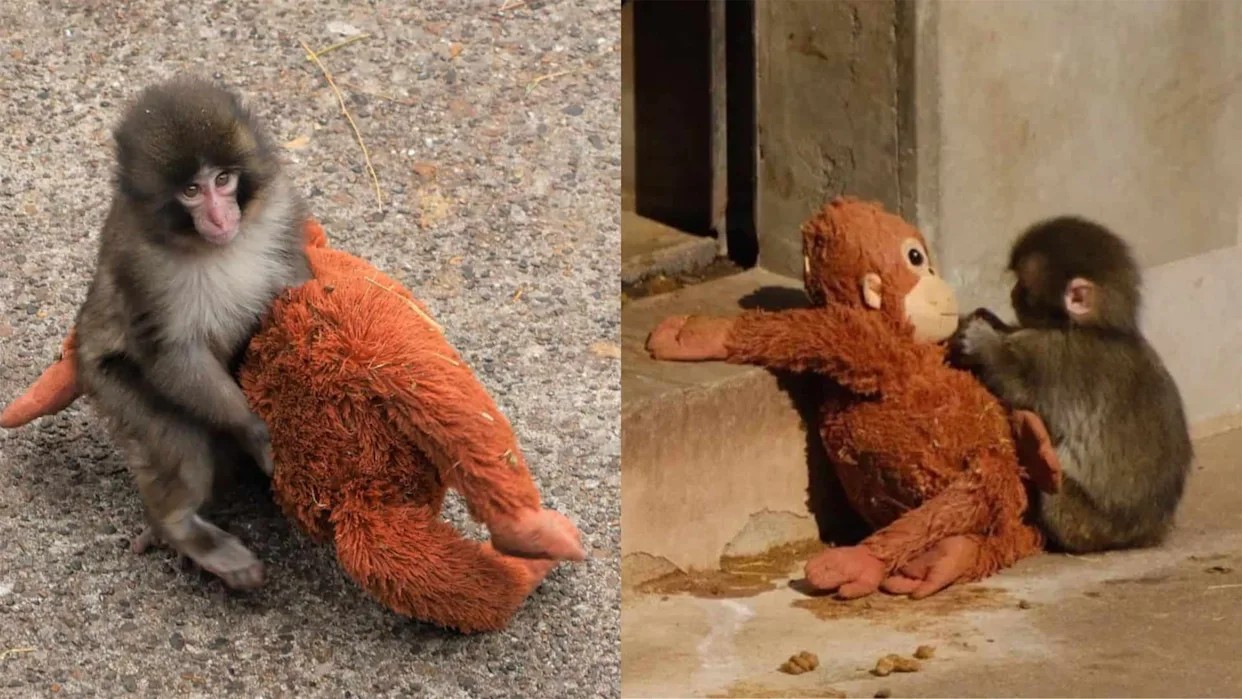
For weeks, Punch carried it everywhere.
The tiny stuffed monkey—stitched smile, soft brown fur, permanently outstretched arms—rarely left his side. He dragged it across the floor, tucked it under his chin during naps, and clutched it tight whenever the room felt too big or too quiet. To anyone watching, it was cute. To Punch, it was something more.
It was comfort. It was company. It was, in his own small way, a hug.
Punch is still young, still figuring out his world. Like many young monkeys raised in managed care environments or sanctuaries, he’s learning social cues, boundaries, and the simple reassurance that comes from contact. In the wild, primates rely heavily on touch—grooming, cuddling, clinging to their mothers or troop members. Physical closeness isn’t optional. It’s essential.
But for Punch, that closeness had been missing.
So he did what many young animals—and even children—do. He found a substitute.
The stuffed monkey became his stand-in for warmth and reassurance. He wrapped himself around it with both arms, pressing his cheek into its plush fur. When startled, he grabbed it tighter. When sleepy, he nuzzled it. It wasn’t alive, but it filled a space.
Caretakers noticed.
They saw how he lit up when holding it. How he groomed its ears with careful little fingers. How he sometimes paused, almost as if waiting for it to respond. The toy had become more than enrichment—it was emotional support.
And then came the day everything changed.
The Moment That Mattered
Introductions between primates are never rushed. They’re carefully planned, monitored, and gradual. Body language matters. Vocalizations matter. Space matters. Trust takes time.
When Punch was finally given the opportunity to interact closely with another monkey, there was tension in the air—not aggressive tension, but anticipation. Would he hesitate? Would he cling to his toy instead? Would he know what to do?
At first, he stayed close to the familiar. The stuffed monkey was tucked under his arm like always. He watched. He inched forward. He retreated. He studied the other monkey’s movements, the way it sat, the way it reached.
And then it happened.
The other monkey moved closer—not dominant, not forceful—just present. Punch froze for a second, eyes wide. His grip tightened around the plush toy.
Then, slowly, he let one arm slip free.
The hug wasn’t dramatic. It wasn’t explosive or chaotic. It was soft. Careful. Almost tentative.
Punch leaned in.
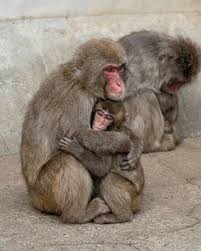
For a moment, he seemed unsure. But when the other monkey didn’t pull away—when it responded with calm acceptance—Punch pressed closer. Both arms wrapped fully this time. His small body melted into the contact he had been practicing for weeks with stitched fabric.
This was different.
This was warm.
This was real.
More Than Just Cute
It’s easy to look at photos of a monkey hugging a stuffed animal and see something adorable. And it is adorable. But beneath the surface is something deeply meaningful.
Touch regulates stress. It lowers anxiety. It builds social bonds. In primates especially, grooming and cuddling are foundational to healthy development. For young monkeys separated from their mothers early or raised in artificial settings, appropriate social interaction can be the difference between isolation and integration.
Punch’s stuffed monkey wasn’t just a toy—it was a bridge.
It gave him practice. It gave him comfort when real companionship wasn’t yet available. It helped him rehearse the very behavior he would one day need with his own kind.
And when that day came, he was ready.
Letting Go—But Not Really
After that first real hug, something shifted.
Punch didn’t abandon his stuffed companion overnight. He still carried it sometimes, still napped with it curled under his chin. But observers noticed he was spending more time near his new friend. Sitting close. Grooming. Learning the rhythms of social life.
The toy slowly became less of a lifeline and more of a keepsake.
There’s something poetic about that. The thing that helped him through loneliness didn’t disappear—it just made room.
A Small Hug With a Big Meaning
In a world that often moves too fast, Punch’s story is a reminder of something simple: connection matters.
Whether it’s a child clutching a blanket, a dog carrying around a favorite toy, or a young monkey hugging a stuffed version of himself, comfort objects serve a purpose. They help bridge gaps. They soften transitions. They give courage in uncertain moments.
But nothing fully replaces the real thing.
The day Punch wrapped his arms around another monkey wasn’t just cute—it was a milestone. It marked growth, trust, and the beginning of belonging.
He finally got his hug.
And this time, it hugged back.