
The Truth About Poaching: Why Most Wildlife Crime Goes Unseen—and What That Means for Hunters

There’s a hard truth most people don’t realize about poaching:
We’re not catching most of it.
According to the Boone and Crockett Club Poach and Pay study, only about 2 to 7 percent of poaching is ever detected. Let that sink in. That means the overwhelming majority of illegal kills, wasted animals, and unethical behavior never even make it onto a report.
And here’s the part that matters even more:
Most cases don’t start with a game warden catching someone in the act.
They start with a tip.
It Starts With Someone Speaking Up
A hunter notices something off.
A landowner finds a carcass that doesn’t make sense.
Someone sees headlights sweeping a field late at night or hears shots fired where they shouldn’t be.
That’s how most cases begin.
Not with flashing lights or a warden stumbling onto a crime—but with someone deciding that what they saw wasn’t right and saying something about it.
And after writing about these cases for years, one pattern becomes impossible to ignore:
The system only works when people are willing to use it.
This Isn’t About Survival—It’s About Greed
There’s a narrative some people still cling to—that poaching is about survival. That it’s someone trying to feed their family.
That’s not what most of these cases look like.
What you see instead is something very different:
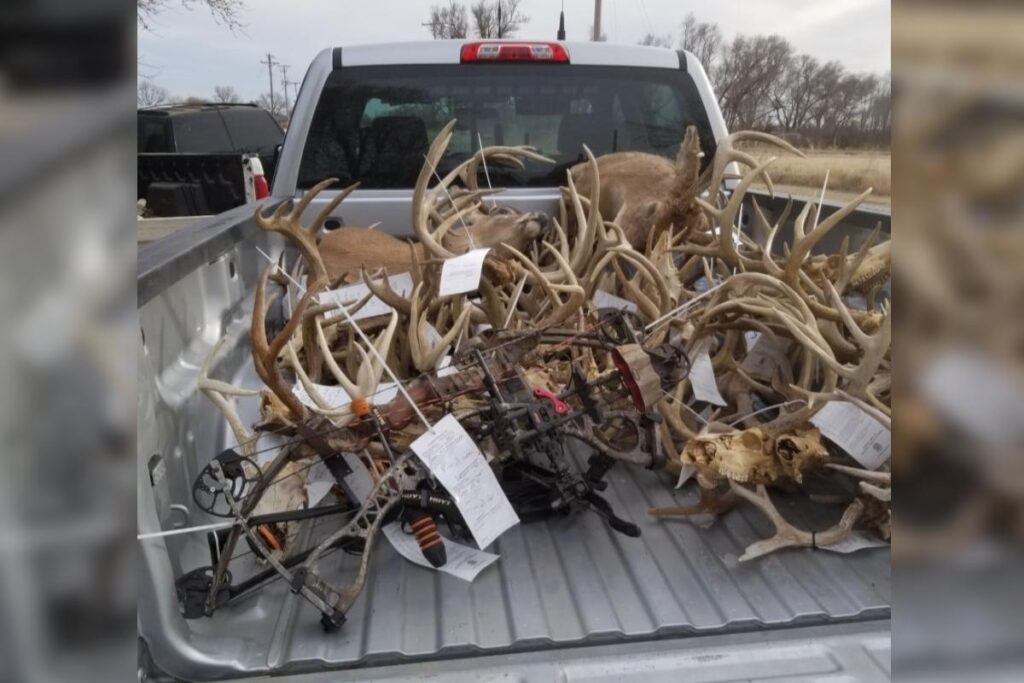
- Animals shot and left to rot
- Antlers removed while the meat is abandoned
- Multiple animals taken well beyond legal limits
- Wildlife treated like disposable targets instead of a resource
This isn’t necessity.
It’s greed.
It’s people chasing a rack for the wall or a photo for their ego, without any regard for the animal itself or the impact on the population.
They Don’t Represent Hunters—They Hurt Them
The vast majority of hunters don’t operate that way.
Most hunters:
- Respect the animal
- Use the meat
- Follow the law
- Care about conservation
They understand that hunting is tied directly to wildlife management, habitat health, and future opportunity.
But poachers?
They take from that system without giving anything back.
They:
- Undermine conservation efforts
- Damage wildlife populations
- Give hunting a bad name
And in many ways, they’re not just breaking the law.
They’re stealing from every ethical hunter out there.
The Reality: Most Poaching Goes Unnoticed
When only 2 to 7 percent of poaching is detected, it changes how you have to think about the problem.
Because it means what you don’t see is far greater than what you do.
Every illegal kill that goes unreported:
- Reduces game populations
- Skews management data
- Impacts future seasons and regulations
And over time, that adds up.
Not in a dramatic, obvious way—but in a slow erosion of the resource.
Silence Is Part of the Problem
Here’s where it gets uncomfortable.
If most poaching goes undetected…
And most cases rely on tips…
Then ignoring it when you see it isn’t neutral.
It’s part of the problem.
It’s easy to look the other way. To tell yourself it’s not your business. To assume someone else will handle it.
But the reality is, without that one person speaking up, nothing happens.
No investigation.
No accountability.
No consequence.
Conservation Isn’t Just Enforcement
A lot of people think conservation is handled by agencies, wardens, and laws.
And they play a critical role.
But they can’t be everywhere.
They can’t see everything.
And they can’t act on what they don’t know.
Real conservation depends on something else:
People.
Hunters. Landowners. Outdoorsmen.
The ones who are actually out there, seeing what’s happening in real time.
The Responsibility That Comes With It
Being part of the hunting community isn’t just about the hunt.
It’s about stewardship.
It’s about protecting the resource—not just for yourself, but for everyone who comes after.
That means:
- Respecting the animal
- Following the law
- And yes—speaking up when something isn’t right
Not because it’s easy.
But because it matters.
The Bottom Line
Poaching isn’t a rare problem.
It’s a hidden one.
Most of it never gets reported. Most of it never gets investigated. And most of it continues because nobody says anything.
But when someone does speak up, it changes everything.
Because conservation doesn’t just depend on laws.
It depends on people willing to defend what matters.
And in the end, that responsibility doesn’t belong to someone else.
It belongs to all of us.