
Undercover Game Wardens Infiltrate Poaching Ring—Michigan Hunters Busted in Multi-State Deer Case
What started with a simple tip turned into a full-blown undercover investigation—and ended with multiple hunters facing fines, jail time, and losing their hunting privileges.
In a case that reads more like a crime story than a hunting trip, a group of hunters from Michigan were sentenced in Ohio after a two-year investigation into illegal deer hunting practices, according to the Ohio Division of Wildlife.
And at the center of it all?
A method every ethical hunter knows crosses the line.
The Tip That Started It All
The investigation began in 2023 when a wildlife officer received a tip about suspicious activity involving out-of-state hunters, according to the Ohio Department of Natural Resources.
Not long after, a second tip came into the ODNR communications center.
That was enough to get attention.
According to ODNR, those tips led investigators to begin digging deeper—and what they uncovered quickly escalated into something much bigger than a single violation.
Going Undercover
Rather than making an immediate arrest, officers took a different approach.
They went undercover.
According to a statement from the Ohio Department of Natural Resources, investigators infiltrated the group, gathering:
- Photos
- Videos
- First-hand observations
They didn’t just rely on secondhand reports—they witnessed violations themselves, confirming what the original tips suggested.
This wasn’t a one-time mistake.
It was a pattern.
The Illegal Method: Jacklighting
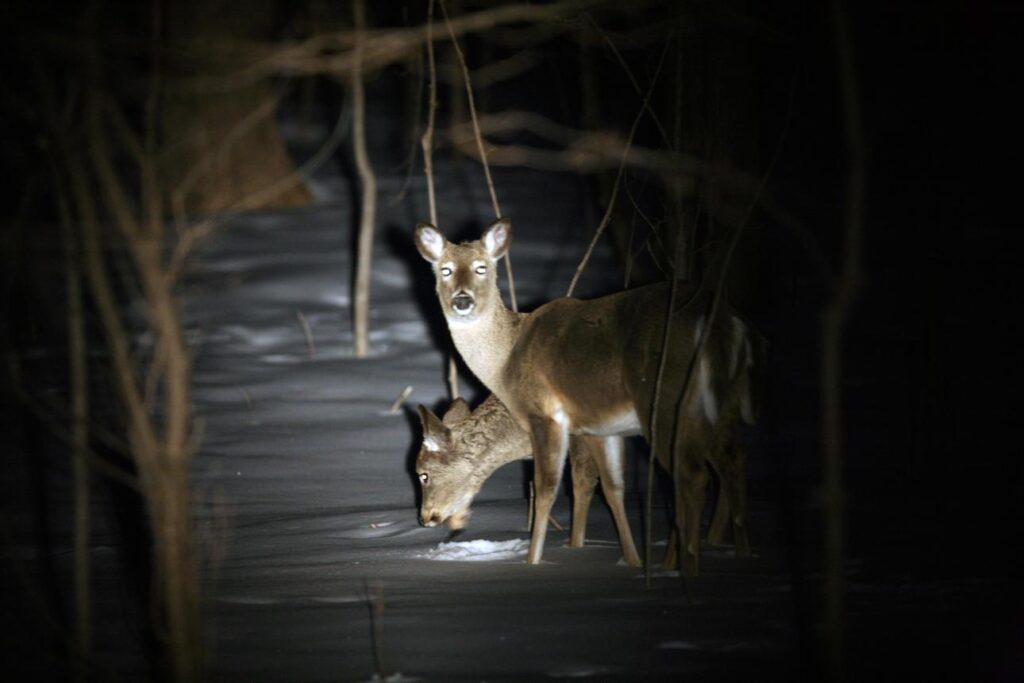
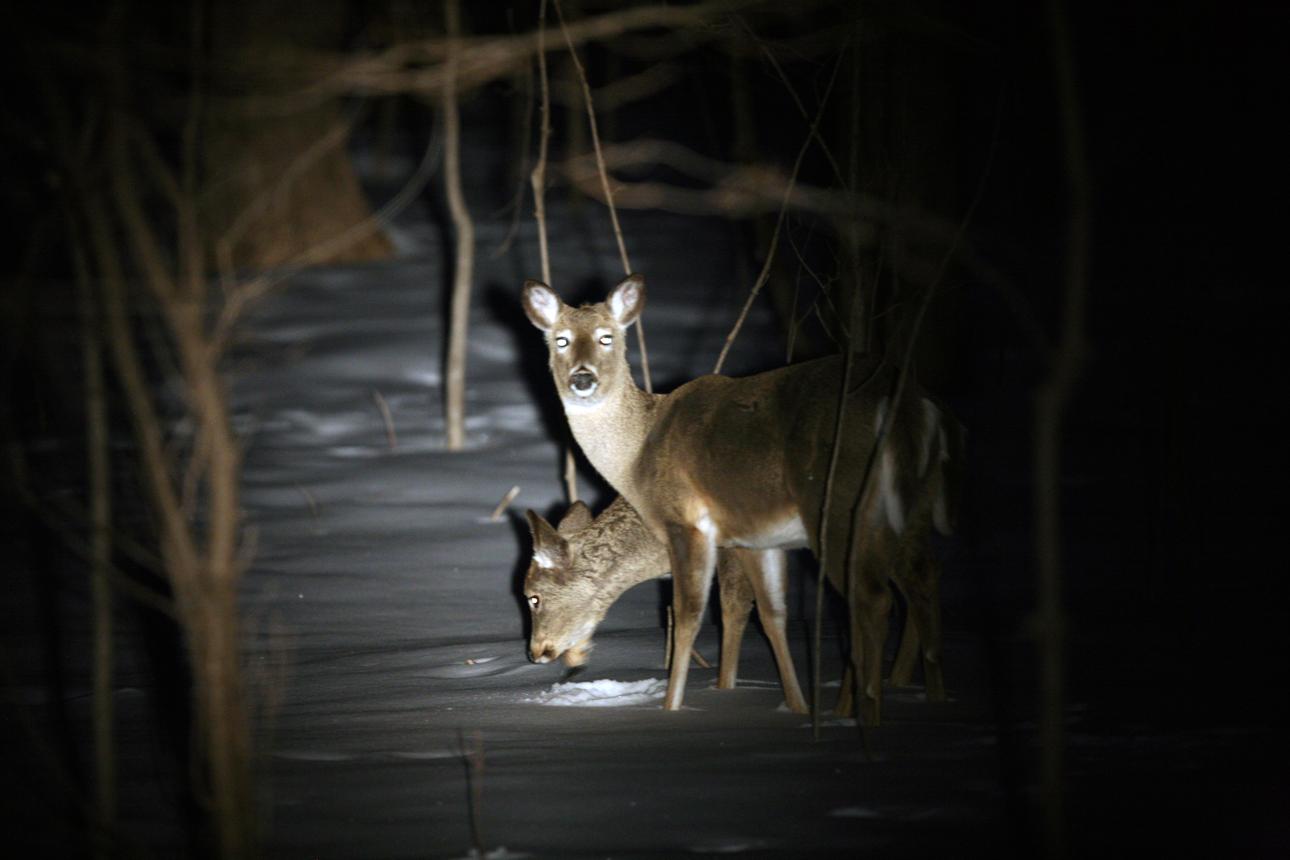
At the center of the case was a practice known as jacklighting—an illegal and widely condemned method of hunting deer at night using artificial light.
By shining bright lights into fields or wooded areas, deer can become temporarily disoriented or “frozen,” making them easy targets.
According to the Ohio Division of Wildlife, the group used this method to:
- Locate deer at night
- Shoot from or near vehicles
- Harvest animals outside legal hunting conditions
It’s not just illegal.
It’s the kind of activity that undermines fair chase—and gives all hunters a bad name.
The Takedown
After months of surveillance, the operation came to a head in January 2025.
Wildlife officers, working alongside the Guernsey County Sheriff’s Office, moved in while the group was actively hunting.
Using a drone and coordinated enforcement, officers contacted five hunters in Ohio while other suspects were identified across Ohio and Michigan with assistance from the Michigan Department of Natural Resources.
By that point, the evidence had already been built.
Now it was time to act.
The Charges and Sentences
In total, 11 hunters were charged, including five from Michigan.
The charges weren’t minor.
They included:
- Jacklighting
- Hunting from a motor vehicle
- Failure to properly tag or check harvested deer
- Hunting without proper licenses or permits
- Providing false information
- Theft and property violations
According to court records cited by Ohio Department of Natural Resources, the penalties added up quickly.
Key Sentences Included:
James Barrett (28, Harrison Township, MI):
Convicted on multiple counts across two counties, including jacklighting and theft of a cellular trail camera. He received:
- Jail time (with additional suspended time)
- 36 months probation
- 300 days of house arrest with GPS monitoring
- Restitution and court costs
- Three-year hunting license revocation
Todd Brown (51, Atlanta, MI):
Charged with multiple licensing and hunting violations, including jacklighting. His sentence included:
- Over $9,400 in restitution
- Forfeiture of antlers
- Three-year license revocation
- Suspended jail time and probation
Paul Laurain (42, Sterling Heights, MI):
Convicted of aiding and safety violations. He received fines, restitution, and a three-year license suspension.
James Laurain (71, Sterling Heights, MI):
Convicted of tagging and safety violations, resulting in fines, restitution, and license revocation.
Jonathan Ricker (51, Washington Township, MI):
Convicted of licensing violations and providing false information, with fines, restitution, and a three-year suspension.
The remaining suspects, some as old as 80, were from Ohio and West Virginia.
A Pattern, Not a Mistake
What makes this case stand out isn’t just the number of charges—it’s the pattern.
This wasn’t a hunter making a bad call in the moment.
It was:
- Repeated violations
- Organized activity
- Intentional disregard for the law
According to the Ohio Department of Natural Resources, investigators documented multiple incidents over time, showing this wasn’t an isolated event.
The Role of Tips and Technology
One of the biggest takeaways from this case is how it started—and how it was built.
A tip.
That tip led to surveillance, infiltration, and ultimately arrests.
According to the Ohio Division of Wildlife, many poaching cases begin exactly this way, with someone seeing something that doesn’t sit right and speaking up.
From there, technology played a role:
- Photos and videos
- Trail cameras
- Drone surveillance
Everything added up.
Why This Matters
For the vast majority of hunters, stories like this hit hard.
Because ethical hunting is built on:
- Fair chase
- Respect for wildlife
- Following the law
Cases like this don’t just break regulations—they damage the reputation of hunters as a whole.
And they put more pressure on regulations and enforcement moving forward.
The Bottom Line
What started as a tip turned into a two-year investigation, multiple convictions, and serious consequences.
It’s a reminder that in today’s world, illegal hunting doesn’t stay hidden for long.
Between public awareness, technology, and dedicated wildlife officers…
The odds are catching up.
Because in the end, it’s not just about getting away with it.
It’s about the fact that eventually…
You won’t.