
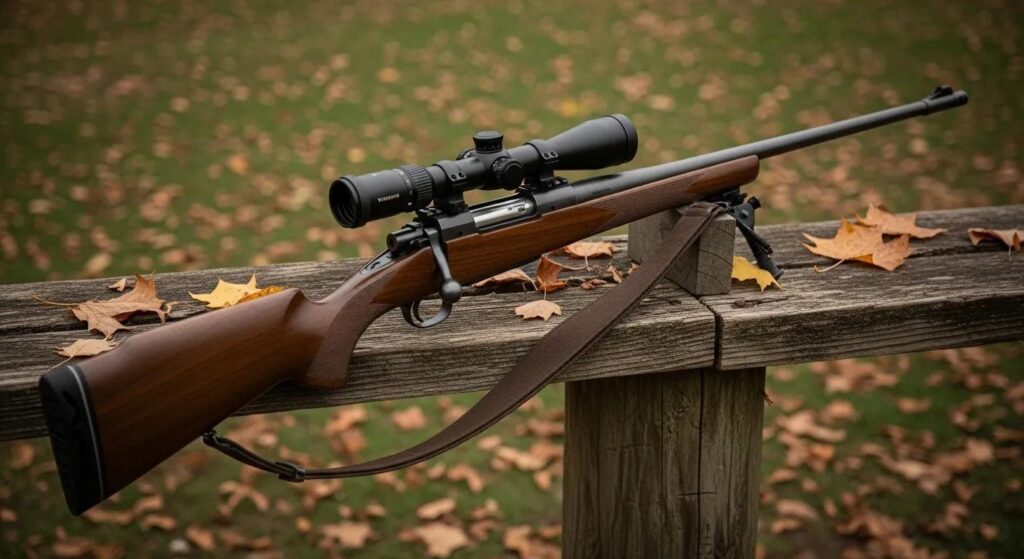
Why Most Hunters Are Over Gunned (And Don’t Know It)

Walk into any hunting camp and you’ll hear it.
“What caliber you shooting?”
And more often than not, the answers lean big—magnums, heavy hitters, cartridges built for distance and power. There’s almost a quiet pressure in hunting culture that bigger must be better, that carrying more gun somehow makes you more prepared. It sounds good in theory, and on paper it’s easy to justify.
But here’s the truth most hunters don’t want to admit:
They’re carrying way more gun than they actually need.
The Myth of “More Power”
Somewhere along the way, hunting culture started equating bigger calibers with better performance. The conversation shifted toward energy numbers, velocity charts, and long-range capability, as if those things alone determined success in the field.
More power. More energy. More “knockdown.”
But in real-world hunting scenarios, that thinking doesn’t always hold up. Most deer are taken:
- Inside 200 yards
- Often much closer
- In conditions that aren’t ideal
That means uneven terrain, awkward shooting positions, and limited time to react. At those distances, cartridges like:
- .270 Winchester
- .308 Winchester
- 6.5 Creedmoor
…perform nearly identically in terms of effectiveness on game. The bullet still reaches vital organs, still delivers lethal energy, and still gets the job done cleanly when placed correctly.
The animal doesn’t know the difference.
Recoil: The Problem Nobody Talks About
Here’s where overgunning really shows up.
Recoil.
It’s the part most hunters downplay or ignore, but it has a direct impact on performance. Larger calibers come with more kick, and over time that creates problems whether you realize it or not.
- Flinching
- Poor shot placement
- Slower follow-up shots
Even experienced shooters can develop a subtle flinch when shooting heavier rifles. It might not show up on the first shot, but it creeps in over time—especially when practicing off a bench.
A hunter who flinches with a magnum will almost always shoot worse than someone who is comfortable behind a lighter-recoiling rifle. And in hunting, where you often only get one opportunity, that difference matters more than any ballistic advantage.
Accuracy Beats Energy Every Time
You can have all the energy in the world on paper. You can study charts, compare foot-pounds, and convince yourself you’re gaining an advantage.
But if you can’t put the bullet where it needs to go, it doesn’t matter.
A well-placed shot from a moderate cartridge will outperform a poorly placed shot from a magnum every time. That’s because terminal performance is only effective when it reaches the vitals—and that requires precision, not just power.
That’s not opinion.
That’s reality in the field.
The Range Illusion
A lot of hunters justify bigger calibers with one argument:
“I want the option to shoot long range.”
And on the surface, that sounds reasonable. But it raises a more important question:
How often are you actually taking those shots?
Most hunters:
- Don’t practice beyond 200–300 yards
- Don’t regularly shoot in wind
- Don’t train for real-world conditions
Long-range shooting isn’t just about equipment—it’s about skill, repetition, and understanding environmental factors. Without that, having a rifle capable of extreme distance doesn’t translate into ethical, effective hunting.
So while the rifle may be capable…
The shooter often isn’t.
The Cost of Overgunning
It’s not just recoil.
Bigger calibers often come with trade-offs that affect how often—and how well—you shoot:
- More expensive ammo
- Less practice
- Heavier rifles
When ammo costs more, people shoot less. When they shoot less, their confidence drops. And when confidence drops, mistakes increase.
It’s a cycle most hunters don’t even realize they’re in. They invest in more power, but lose proficiency in the process.
What Actually Works in the Field
The best hunting setup isn’t the most powerful.
It’s the one you can shoot confidently and consistently, no matter the conditions. That means being able to shoulder your rifle naturally, control your breathing, and break a clean shot without hesitation.
For most hunters, that means:
- Moderate recoil
- Familiar platform
- Reliable accuracy
Cartridges like:
- .270 Winchester
- .308 Winchester
- 6.5 Creedmoor
…have built their reputation over decades because they strike that balance. They offer enough power for clean kills while still being manageable for most shooters.
They work.
When Bigger Calibers Actually Make Sense
To be fair, there are situations where stepping up in caliber is justified and even necessary.
Situations like:
- Elk or larger game
- Extended-range shooting with proper training
- Hunting in open terrain with long shot opportunities
In those cases, added energy and performance can make a difference. But those scenarios don’t represent the majority of hunts, especially for whitetail hunters in wooded or semi-open environments.
For the average hunter?
It’s often unnecessary.
Confidence Changes Everything
When you shoot a rifle that:
- Doesn’t punish you
- Feels natural
- Builds confidence
Everything improves.
Your groups tighten. Your trigger control improves. You stop anticipating recoil and start focusing on the shot itself. That confidence carries over into the field, where it matters most.
And when that moment comes—when the deer steps out—you’re not thinking about recoil or noise or anything else.
You’re just executing the shot.
The Bottom Line
Most hunters aren’t missing because their caliber is too small.
They’re missing because their rifle is too much.
Overgunning creates problems that don’t show up on a ballistic chart—but show up immediately in the field, where conditions aren’t perfect and second chances are rare.
Because at the end of the day…
It’s not about how much power you’re carrying.
It’s about how well you can use it.