
Turkey hunting is one of the most exciting and frustrating pursuits in the woods. These birds have incredible eyesight, sharp hearing, and a tendency to disappear the moment something feels off. Success often comes down to preparation, patience, and having the right gear. While skill and experience matter, there are a handful of essential items that dramatically improve your odds of filling a tag.
Here are five must-have items that can make the difference between hearing gobbles all morning and actually bringing a bird home.
1. A Reliable Turkey Call
If there’s one tool that defines turkey hunting, it’s the call. Turkey calls allow you to mimic hen vocalizations and convince gobblers that there’s a receptive hen nearby. Without one, you’re basically hoping to get lucky.
There are several types of turkey calls, and each has its strengths:
-
Box calls are loud, easy to use, and great for beginners. They’re excellent for locating birds and making long-distance calls.
-
Slate (pot) calls offer more realism and control. They’re ideal for subtle calling when birds are close.
-
Diaphragm (mouth) calls are hands-free and extremely versatile, though they require practice to master.
Most experienced hunters carry at least two different types. Conditions change quickly in the woods, and having options allows you to adjust your calling strategy. Sometimes aggressive calling works, but often soft yelps and clucks are what seal the deal.
2. Proper Camouflage Clothing

Turkeys rely heavily on their eyesight to survive. Their vision is among the best in the animal kingdom, and they can detect even the slightest movement or unnatural color.
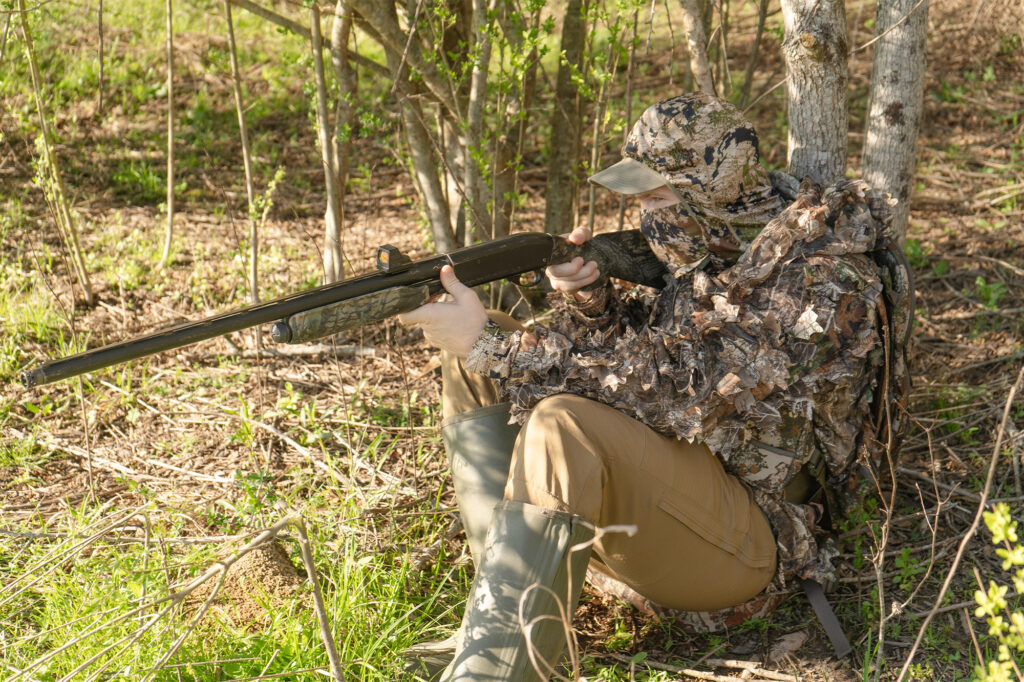
Proper camouflage is absolutely critical, and that includes more than just a jacket and pants. Essential camouflage items include:
-
Camouflage shirt and pants
-
Face mask or face paint
-
Camouflage gloves
-
Hat or head covering
Your face and hands are especially important to conceal since they move frequently while calling or preparing to shoot. Even small movements can spook a gobbler instantly.
Equally important is sitting still and using natural cover like trees, brush, or shadows. Camouflage helps you blend in, but movement will still give you away.
3. Turkey Decoys
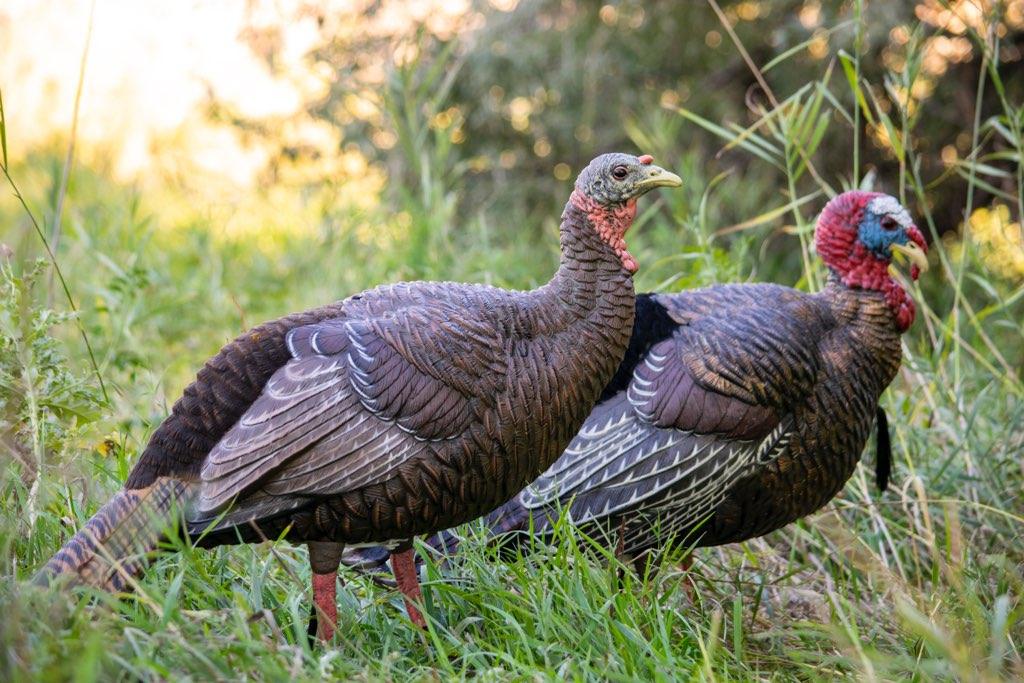
Decoys add a visual element to your calling and can be incredibly effective at drawing gobblers into range. When a tom hears your calls and sees what appears to be a hen, it often gives him the confidence to close the distance.
The most common and effective setups include:
-
Single hen decoy: Simple and effective, especially early in the season.
-
Hen and jake combination: This setup can trigger dominant gobblers to approach aggressively to challenge the jake.
-
Feeding hen posture: Appears relaxed and natural, which helps put birds at ease.
Placement matters. Position decoys 15 to 25 yards from your setup, ideally in an area where approaching birds will have a clear line of sight.
4. A Comfortable Turkey Vest or Seat
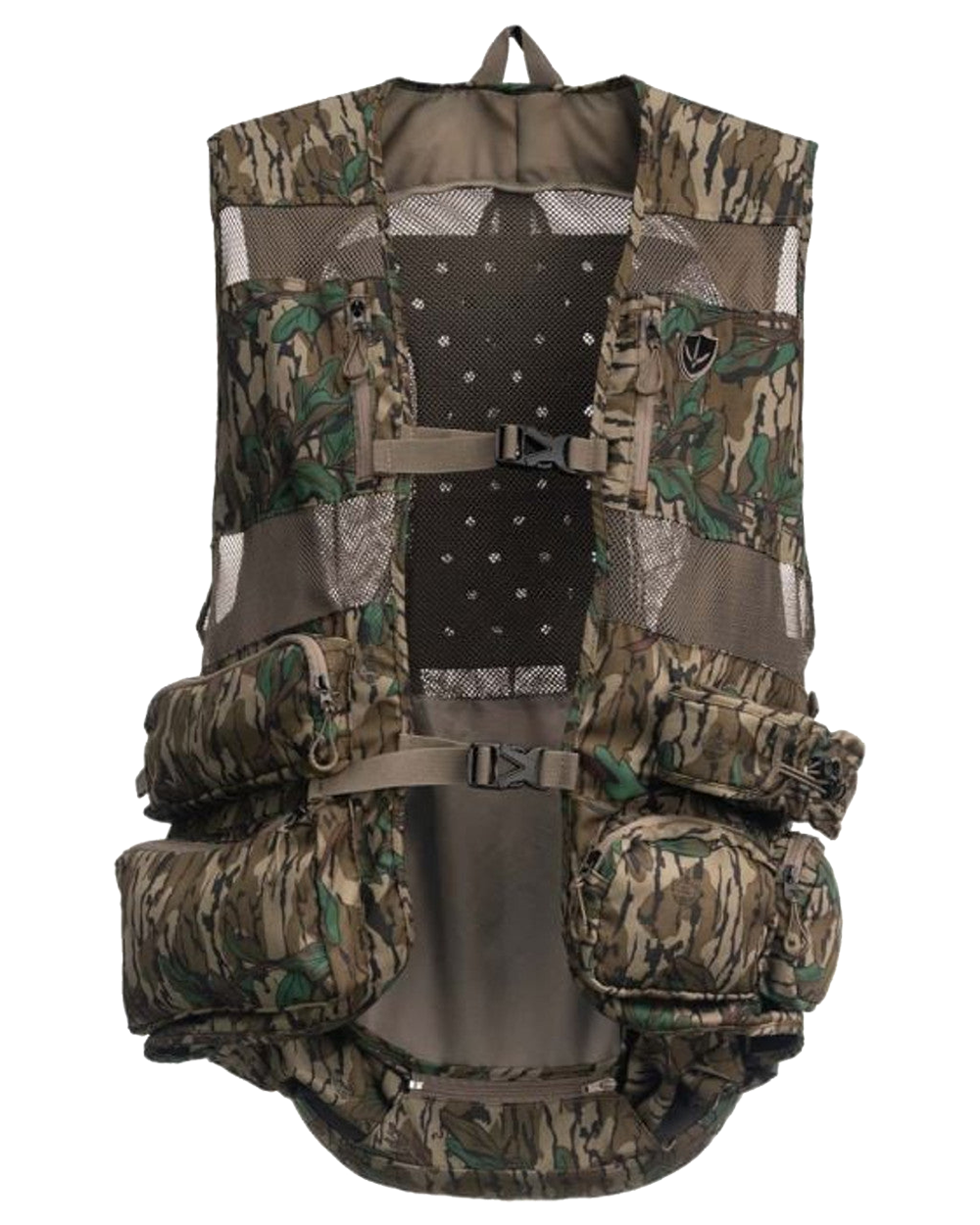
Turkey hunting involves a lot of sitting. Sometimes you’ll stay in one spot for hours waiting for a bird to commit. If you’re uncomfortable, you’ll move more—and movement ruins hunts.
A good turkey vest serves multiple purposes:
-
Provides a comfortable seat cushion
-
Stores calls, shells, and gear
-
Keeps everything organized and within reach
Many vests include built-in fold-down seats, which are incredibly useful when hunting in areas without natural seating. Being comfortable helps you stay still longer, and staying still is often the key to success.
5. The Right Shotgun and Ammunition

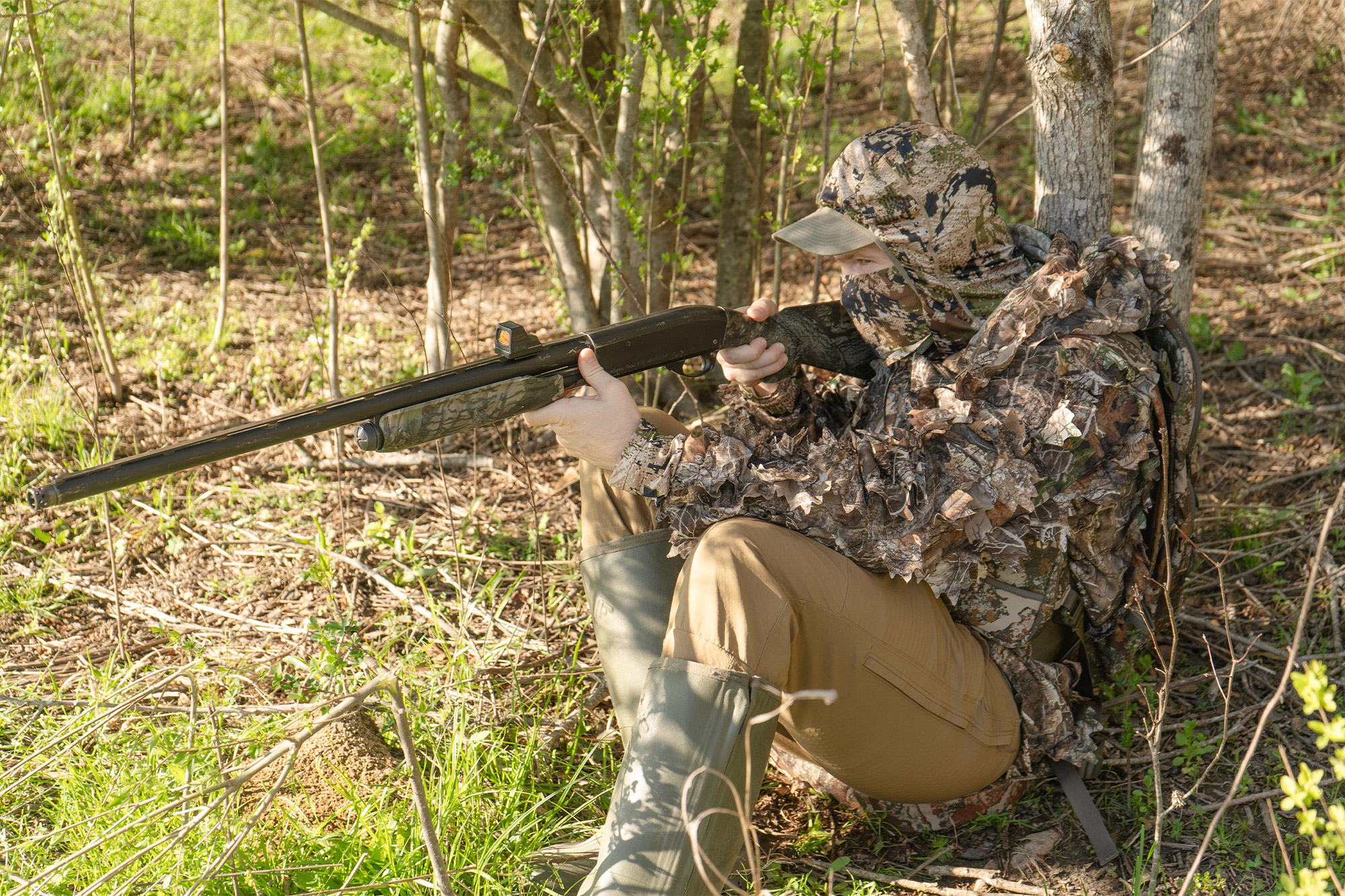
Your shotgun and ammunition are the final pieces of the puzzle. Turkeys have small vital areas, so accuracy matters more than raw power.
Most turkey hunters use:
-
12-gauge or 20-gauge shotgun
-
Turkey-specific loads designed for tight patterns
-
Full or extra-full choke for maximum pattern density
Equally important is patterning your shotgun before the season. This ensures you know exactly how your gun performs at different distances. Ethical shots are typically taken within 40 yards, though many hunters prefer closer distances.
Confidence in your equipment makes a huge difference when the moment of truth arrives.