
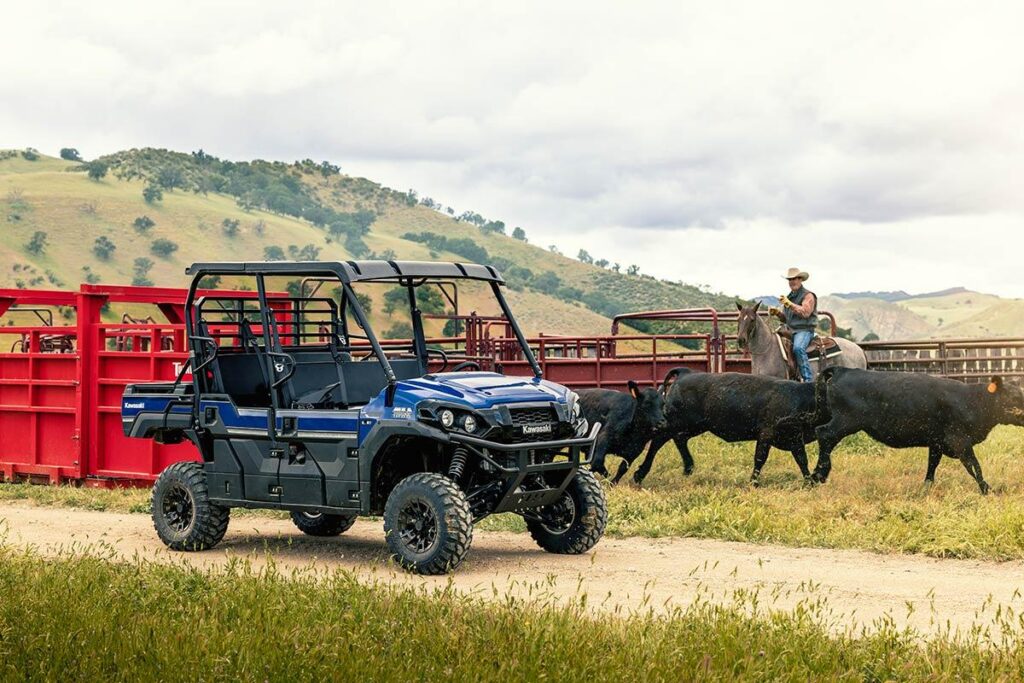
Ultimate Showdown of Polaris Ranger vs. Kawasaki Mule—Which One Is Actually Better for Hunting and Ranch Work?

Few debates around a ranch create stronger opinions than the question of which side-by-side deserves a permanent place in the barn.
Bring up the Polaris Ranger or the Kawasaki Mule around hunters and ranchers, and the conversation usually turns personal very quickly. One side insists the Ranger offers the comfort, speed, and versatility necessary for long days hunting or covering rough country. The other argues the Mule remains one of the toughest, most dependable workhorses ever built and will still be running long after newer machines begin asking for repairs.
The reality is that both machines earned loyal followings for legitimate reasons.
However, depending on whether your property revolves around hunting, ranch work, or a combination of both, one machine may fit your lifestyle much better than the other.
If Hunting Matters Most, the Polaris Ranger Usually Has the Advantage

For hunters who spend weekends checking feeders, running trail cameras, hauling blinds, or quietly moving through ranch roads before daylight, the Polaris Ranger often feels like the more natural choice.
The biggest reason involves ride quality.
A Ranger generally provides a smoother, more comfortable ride over rough senderos, rocky trails, washouts, and uneven ranch roads. That difference becomes noticeable very quickly when someone spends hours crossing a large property or repeatedly traveling between hunting spots. Long days in rough country feel less exhausting when the machine handles bumps and uneven terrain more comfortably.
Speed also becomes a factor.
Many Ranger models offer stronger acceleration and quicker handling, which matters more than some people realize during hunting season. When daylight is limited or deer movement suddenly changes, the ability to cover ground efficiently can make a noticeable difference. A Ranger often feels more responsive and easier to maneuver through brush country or winding trails where hunters constantly move between stands and feeders.
At the same time, some ranchers point out that higher performance occasionally comes with tradeoffs.
The Ranger often feels more refined and feature-rich, but some owners believe it may demand slightly more maintenance over time compared to simpler work-focused machines.
When Ranch Work Comes First, the Kawasaki Mule Makes a Strong Case

For ranchers who spend most days hauling feed, fixing fences, checking livestock, carrying tools, or moving supplies across large properties, the Kawasaki Mule continues building its reputation the old-fashioned way.
It simply keeps working.
Among longtime ranchers, one phrase repeatedly surfaces when discussing the Mule: reliability. Many owners describe the machine as remarkably durable, explaining that it tolerates hard work, rough treatment, and daily abuse without demanding constant attention. While the Mule rarely feels flashy or exciting, it frequently earns praise for starting consistently and handling difficult jobs without complaint.
That reliability matters tremendously on a working ranch.
Nobody fixing a broken water line several miles from the house spends much time worrying about suspension comfort or top speed. Ranchers care whether the machine starts, carries heavy loads, and survives difficult conditions without becoming a problem itself.
The Mule also offers a slower, steadier driving experience that many working ranches actually prefer. When carrying fencing supplies, feed sacks, tools, or equipment through rough terrain, a calmer ride often feels more practical than speed.
The downside, according to some owners, is that the Mule occasionally feels less refined or enjoyable to drive for recreation-heavy use. Compared to a Ranger, it may feel slower, rougher, and less exciting for hunters spending long days covering country.
Reliability Is Where the Debate Usually Gets Serious
This part of the conversation tends to create the strongest opinions.
Ask ten ranchers which side-by-side lasts longer, and chances are good you will hear ten passionate answers backed by years of personal experience. Polaris owners often point toward comfort, modern features, and versatility, while Mule owners frequently focus on durability, simplicity, and long-term dependability.
Fairly or unfairly, the Mule carries a reputation for feeling almost indestructible.
The Ranger, meanwhile, often earns praise for being significantly more enjoyable to drive.
In practical terms, the difference feels simple.
The Mule often behaves like dependable ranch equipment designed to survive years of work, while the Ranger feels closer to a pickup truck built for both work and enjoyment.
Neither description should be taken as criticism.
They simply appeal to different priorities.
So Which One Actually Wins?
The frustrating but honest answer depends entirely on how someone uses their property.
If hunting sits near the top of the priority list and comfort, speed, and covering ground efficiently matter most, the Polaris Ranger generally feels like the stronger choice. Hunters who spend long mornings checking cameras, hauling gear, and navigating rough country often appreciate the smoother ride and better overall driving experience.
If daily ranch work takes priority and dependability matters more than performance, the Kawasaki Mule becomes incredibly difficult to overlook. Ranchers who primarily haul feed, fix fences, move cattle, and depend on equipment every single day often appreciate the Mule’s reputation for toughness and simplicity.
For people balancing hunting and ranching equally, the choice becomes much closer.
Many landowners eventually choose the Ranger because of its versatility, while heavier working operations often stay loyal to the Mule because they value reliability above everything else.
The Bottom Line
The Polaris Ranger and Kawasaki Mule both earned their reputations honestly because each machine solves a different problem exceptionally well.
The Ranger generally offers better comfort, faster handling, and a more enjoyable hunting experience for people covering large amounts of rough terrain. The Mule often provides unmatched dependability and practical utility for ranchers who expect equipment to work hard every day without drama.
At the end of the day, however, most ranchers eventually judge any side-by-side by the same standard:
When something breaks, the weather turns bad, or work suddenly becomes difficult, does the machine still get the job done and bring you home? For this writer I choose the Kawasaki Mule everytime.