
Hunter Thought Coyotes Were Spooking Deer—Then Trail Cameras Revealed Something Far Bigger Moving Through the Ranch

For one South Texas hunter, deer season reportedly started with a level of frustration he could not explain.
According to the hunter, mature bucks that had appeared regularly throughout the summer suddenly became difficult to pattern as the season approached. Feeders remained active, water conditions looked good, and habitat across the ranch had not changed significantly, yet deer movement reportedly shifted almost overnight. Daytime sightings dropped, familiar bucks stopped showing consistently, and several promising hunting spots suddenly felt unusually quiet.
At first, the hunter believed coyotes were causing the problem.
According to him, coyote activity had increased noticeably around the property in recent weeks. Tracks repeatedly crossed senderos, nighttime howling became more common, and trail cameras occasionally captured coyotes moving near bedding areas where deer once traveled comfortably. Like many hunters, he assumed increased predator pressure had started making deer nervous enough to change their routines.
The explanation felt reasonable.
But according to the hunter, something about the timing still seemed strange.
The deer had not completely disappeared.
They had simply become harder to predict.
The Trail Cameras Started Showing a Different Pattern
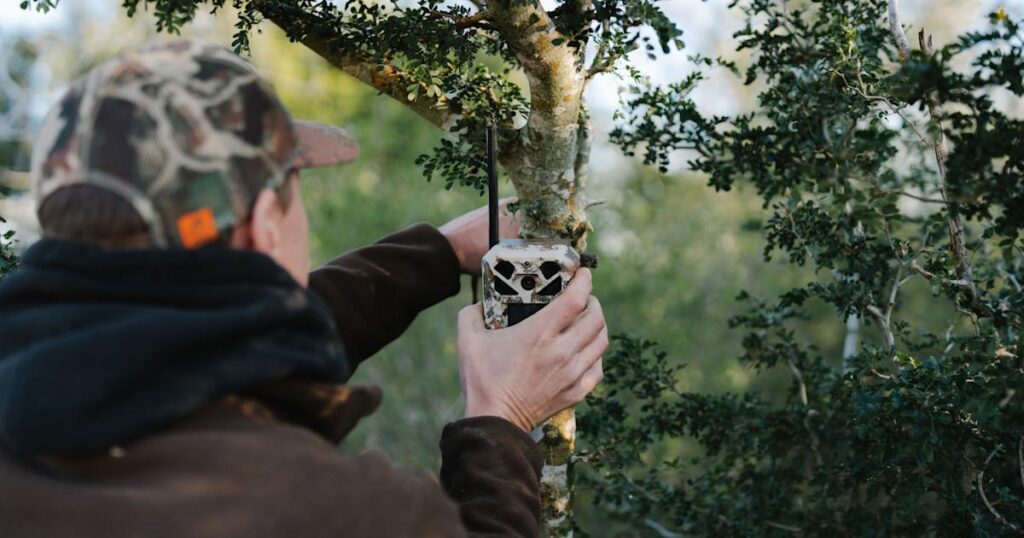
Rather than continue guessing, the hunter reportedly decided to move several trail cameras away from feeders and shift attention toward travel corridors, creek crossings, and thicker sections of brush where deer often staged before entering open areas.
The images reportedly changed everything.
Coyotes still appeared from time to time, but something much larger quietly started showing up on camera.
According to the hunter, a mature mountain lion had reportedly been moving across portions of the ranch for weeks without anyone realizing it. Trail camera photos allegedly showed the cat traveling creek bottoms, crossing senderos after dark, and occasionally appearing surprisingly close to locations where deer activity had recently slowed.
The timestamps reportedly stood out immediately.
According to the hunter, deer movement often dropped sharply within hours of the lion appearing in the area. Some cameras reportedly showed deer behaving differently altogether, lingering less around feeders and moving more cautiously through open ground.
Suddenly, the change in deer behavior made much more sense.
Why a Mountain Lion Can Quietly Change a Ranch
Unlike coyotes, mountain lions often move through a property almost invisibly.
According to the Texas Parks and Wildlife Department, mountain lions remain elusive predators capable of covering large distances while staying remarkably difficult to detect. Although attacks on people remain extremely rare, lions heavily influence prey behavior, particularly deer movement, because deer naturally respond to the presence of apex predators by becoming more cautious and shifting travel patterns.
Many hunters may never even realize a lion passed through.
According to wildlife biologists, trail cameras increasingly reveal mountain lions using creek systems, rough terrain, and heavy cover in places where people rarely expect them. In some cases, a lion may only remain on a property briefly before continuing across a much larger territory.
For this hunter, however, the timing reportedly felt impossible to ignore.
The deer slowdown lined up almost perfectly with the cat’s appearances.
The Story Eventually Resolved
According to the hunter, frustration gradually turned into relief once the mystery finally had an explanation.
Rather than panic or immediately assume the ranch had developed a permanent mountain lion problem, the hunter reportedly decided to simply monitor the situation and let nature play out. Over the following weeks, trail camera activity suggested the lion gradually moved on, with sightings becoming less frequent until they reportedly stopped altogether.
As that happened, deer movement slowly returned.
According to the hunter, familiar bucks eventually began reappearing near feeders and travel routes, and daytime activity reportedly improved enough to make hunting feel normal again.
The coyotes, it turned out, had never been the real issue.
The ranch had simply hosted a visitor few people ever see.
The Bottom Line
For one South Texas hunter, disappearing deer initially seemed like another example of coyotes putting pressure on local game.
Trail cameras, however, reportedly told a different story after revealing a mountain lion quietly moving across the ranch and altering deer behavior in ways the hunter had not expected. Once the predator reportedly moved through the area, deer activity gradually returned and the mystery finally made sense.
The experience reportedly reinforced something many experienced hunters already understand:
Sometimes the biggest thing affecting a ranch is the one thing nobody realizes is there.