
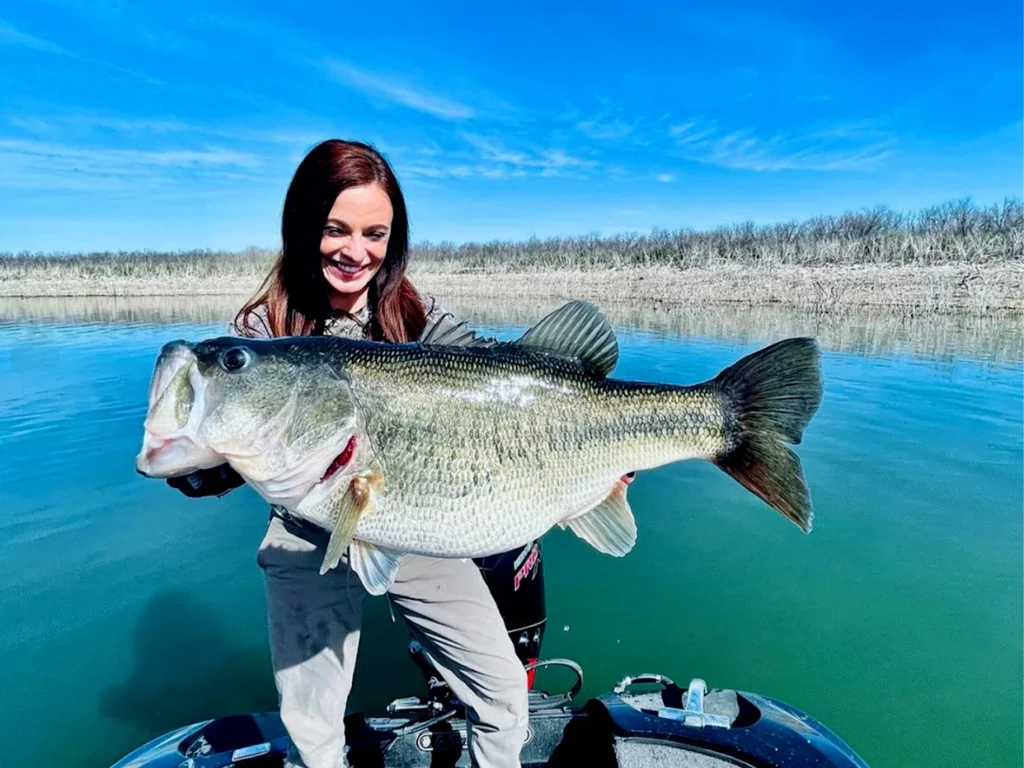
Some of The Biggest Bass Ever Caught in Each State

The Pursuit of a True Giant
For bass anglers, few accomplishments compare to landing a true giant largemouth bass. Across the United States, state record fish represent decades of dedication from anglers who spend countless hours studying lakes, weather patterns, and fish behavior.
State record bass often become legendary within fishing communities. These fish are typically old, highly cautious predators that have survived years of fishing pressure and environmental changes.
According to fisheries biologists with the U.S. Fish and Wildlife Service, largemouth bass can live more than 10–15 years in ideal conditions, giving them plenty of time to grow to enormous sizes when food and habitat are abundant.
While every state keeps official records, some bass have reached truly unbelievable weights. From deep southern reservoirs to small farm ponds, monster bass have been pulled from nearly every corner of the country.
The World Record That Set the Standard
Any conversation about giant bass starts with the world record.
The official all-tackle world record largemouth bass is a tie between two fish weighing 22 pounds, 4 ounces. The first was caught by George Perry in 1932 at Montgomery Lake in Georgia. Decades later, angler Manabu Kurita matched that weight while fishing Lake Biwa in Japan.
According to the International Game Fish Association, the tie remains the official world record because both fish weighed the exact same amount.
That record has stood for more than 90 years in the United States, and it continues to inspire anglers chasing trophy bass.
Southern States Produce the Largest Bass
When it comes to producing truly giant bass, southern states dominate the record books.
Warm water climates allow bass to feed and grow for longer periods during the year. Longer growing seasons combined with fertile reservoirs create ideal conditions for trophy fish.
Texas is famous for producing giant bass through its selective breeding program.
According to the Texas Parks and Wildlife Department, the official Texas state record largemouth bass weighed 18.18 pounds and was caught by angler Barry St. Clair at Lake Fork in 1992.
Lake Fork has since become one of the most famous trophy bass lakes in America.
California has also produced incredible bass thanks to its nutrient-rich reservoirs. The California state record largemouth bass weighed 21 pounds, 12 ounces, caught by angler Mac Weakley in 2006 at Dixon Lake.
Although Weakley’s fish fell slightly short of the world record, it remains one of the largest bass ever documented.
Record Bass From Across the Country
While southern waters often produce the biggest fish, nearly every state has produced impressive largemouth bass.
Florida, long considered one of the top bass fishing destinations in the country, holds a state record of 17.27 pounds caught by angler George W. Perry at Polk County’s Lake Montgomery.
In Alabama, the record bass weighed 16 pounds, 8 ounces, caught by angler Tommy Martin in 1987.
Even northern states where bass have shorter growing seasons can produce surprisingly large fish.
Michigan’s state record largemouth bass weighed 11.94 pounds, caught in 1934. According to fisheries data from the Michigan Department of Natural Resources, colder climates slow bass growth but can still produce trophy fish in productive lakes.
Similarly, New York’s state record largemouth bass weighed 11 pounds, 4 ounces, caught in Buckhorn Lake in 1987.
These records demonstrate that giant bass can come from many types of fisheries.
What Makes a Bass Grow So Big
Several factors influence whether a lake can produce record-sized bass.
Food availability is one of the most important factors. Bass that feed on protein-rich forage such as shad, bluegill, and trout can grow much faster than bass in less productive waters.
According to fisheries research conducted by the Texas Parks and Wildlife Department, lakes that contain abundant forage species often produce the largest bass populations.
Water temperature also plays a critical role. Warmer climates allow bass to feed for more months each year, accelerating growth.
Genetics matter as well. Florida-strain largemouth bass, which are native to southern states, often grow significantly larger than northern-strain bass.
Because of this, many wildlife agencies have introduced Florida-strain bass into reservoirs to improve trophy fishing opportunities.
The Future of Record Bass
Modern catch-and-release fishing practices are helping many lakes produce larger bass than in the past.
Anglers today often release trophy fish so they can continue growing and potentially be caught again. This conservation-minded approach has helped maintain healthy bass populations across the country.
Organizations like Bass Anglers Sportsman Society have also promoted responsible fishing practices and habitat conservation.
As fisheries management improves and anglers continue protecting trophy fish, the possibility remains that a new record bass could emerge from an unexpected lake.
The Endless Chase for a Giant
For many anglers, chasing a record bass represents the ultimate fishing challenge.
Landing a fish that could weigh more than 10 pounds requires patience, knowledge, and sometimes a little luck. But that pursuit is part of what keeps bass fishing one of the most popular sports in America.
According to the U.S. Fish and Wildlife Service, millions of Americans fish for bass every year, making it one of the most widely targeted freshwater species in the country.
And somewhere beneath the surface of a lake, reservoir, or hidden farm pond, the next record-breaking bass may already be swimming.