
Locked Out: Land Dispute Over Easement Turns Into Legal Battle

What started as a routine land purchase in San Saba County has turned into a full-blown dispute—highlighting just how quickly things can go sideways when access rights and neighbor relationships collide.
At the center of the conflict is something many rural buyers overlook until it becomes a problem:
An easement.
The Property—and the Problem
According to those familiar with the situation, the property in question was purchased with a clearly defined easement—granting access across a neighboring tract.
That access wasn’t optional.
It was essential.
Like many rural properties in Central Texas, the land did not have direct road frontage, meaning the easement was the only legal way in and out. Without it, the property becomes difficult—if not impossible—to use.
At first, everything appeared to be in order.
Then came the disagreement.
When Neighbors Become Opponents
Details of the argument vary depending on who you ask, but what’s clear is this:
The relationship between the new landowner and the neighboring property owner deteriorated quickly.
And not long after, the situation escalated.
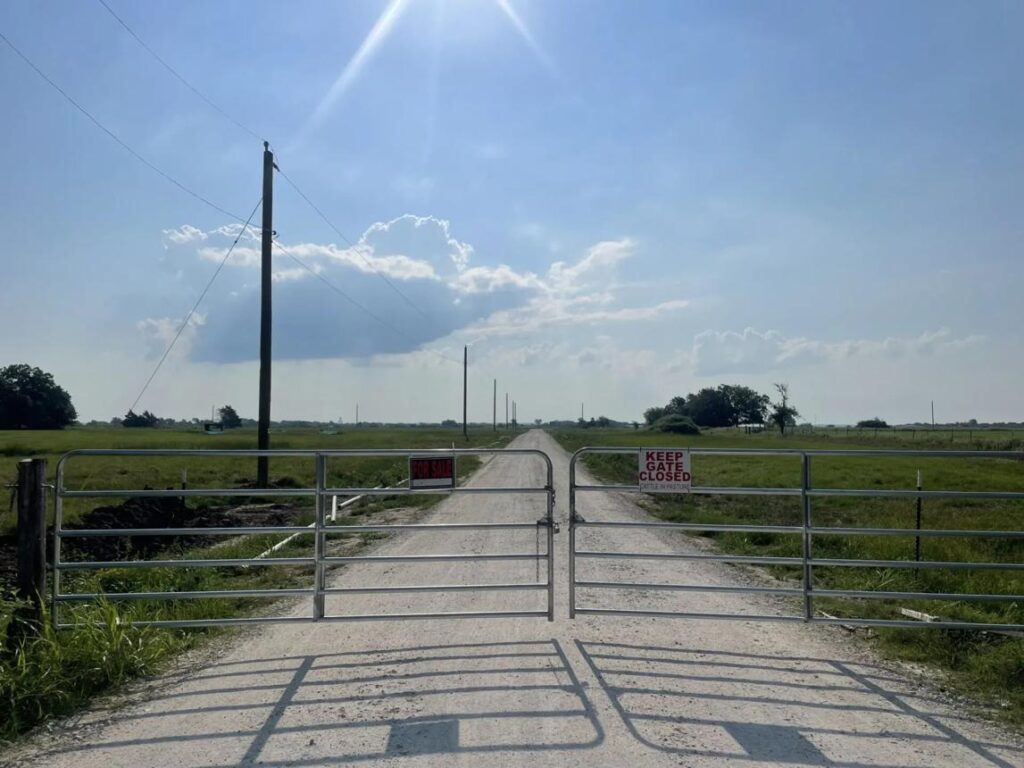
The neighbor—whose land the easement crossed—installed a new gate across the access road, complete with a lock. According to reports, the gate effectively blocked access to the property, preventing the easement holder from entering without permission.
What was once a legal right…
Suddenly became a physical barrier.
What an Easement Actually Means
For many people, the idea of an easement can be confusing.
But in simple terms, an easement is a legal right to use someone else’s property for a specific purpose—in this case, access.
That right is typically:
- Recorded in property documents
- Binding to future owners
- Not dependent on personal relationships
In other words, it doesn’t matter if neighbors get along.
The easement still stands.
Can You Block an Easement?
This is where things get serious.
Under Texas law, an easement holder generally has the right to reasonable access to their property. Blocking that access—especially intentionally—can lead to legal consequences.
While property owners can sometimes place gates across easements, those gates:
- Cannot unreasonably interfere with access
- Often require shared access (like keys or codes)
- Must not prevent lawful use
In this case, the addition of a locked gate—without agreed access—has raised questions about whether the neighbor crossed the line.
From Disagreement to Legal Action
With access cut off, the situation quickly moved beyond a simple dispute.
Legal action is now expected—or already underway—depending on how the parties proceed.
Cases like this often involve:
- Court orders to restore access
- Clarification of easement rights
- Potential damages for lost use of property
Because when access is denied, the impact isn’t just inconvenient.
It can stop everything:
- Hunting
- Building
- Maintenance
- Even basic entry
A Common Issue in Rural Texas
While this situation may sound extreme, it’s far from rare.
Across Texas, especially in counties like San Saba, many properties rely on easements for access. And when those easements aren’t clearly understood—or respected—conflicts can arise.
Common issues include:
- Disputes over maintenance
- Questions about who can use the road
- Gates, cattle guards, and fencing disagreements
Most of the time, these issues get worked out.
But not always.
The Cost of Conflict
What makes easement disputes especially frustrating is how quickly they escalate.
What starts as a disagreement can turn into:
- Legal fees
- Court involvement
- Long-term tension between neighbors
And in many cases, both sides end up spending more time and money than the issue was ever worth.
All over access.
What Buyers Need to Understand
This situation highlights a critical lesson for anyone buying rural land:
Not all property is equal.
Before purchasing land, buyers should always:
- Verify legal access
- Review easement documents carefully
- Understand exactly where access routes run
- Consider how dependent they are on neighboring land
Because once you buy it—you’re tied to those terms.
The Bigger Picture
At its core, this dispute isn’t just about a gate.
It’s about control.
One landowner believes they have the right to manage their property as they see fit.
The other believes they have a legal right to access theirs.
And when those two collide, the law becomes the deciding factor.
The Bottom Line
A locked gate might seem like a small move.
But in rural Texas, it can shut down an entire property—and spark a legal battle that drags on for months or longer.
As this situation unfolds in San Saba County, it serves as a reminder that when it comes to land ownership…
Access isn’t just important.
It’s everything.