
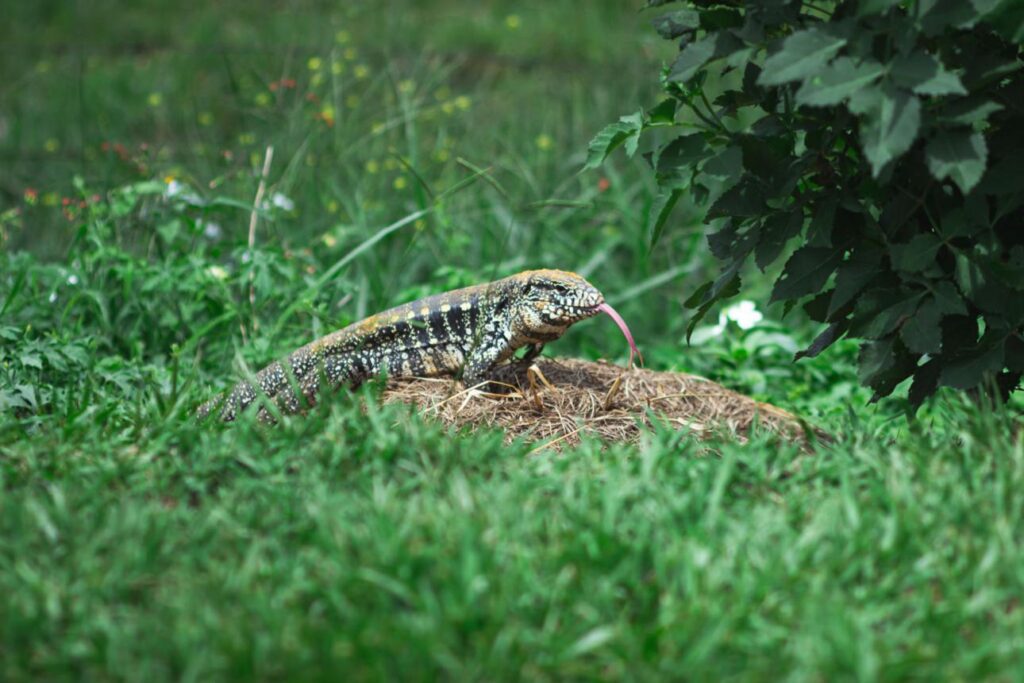
Georgia Officials Say Kill This 4-Foot Lizard If You See One—Now It’s Spreading Across 30 Counties

Wildlife officials in Georgia are sounding the alarm over an invasive reptile that can grow to nearly four feet long, weigh more than ten pounds, and eat just about anything it can fit in its mouth.
The warning may sound like something pulled from a science fiction movie, but state biologists say the threat is very real.
According to the Georgia Department of Natural Resources, residents are being encouraged to kill invasive Argentine black-and-white tegus if they encounter them in the wild, particularly in areas where the reptiles have established populations. Officials say the large lizards have now been reported in roughly 30 counties across Georgia, raising growing concerns about the long-term impact on native wildlife populations.
A Giant Lizard With a Big Appetite
The invasive reptile at the center of the concern is the Argentine black-and-white tegu, a species native to South America that wildlife officials say has become increasingly problematic in parts of the southeastern United States.
According to the Georgia Department of Natural Resources, adult tegus can grow up to four feet long and weigh ten pounds or more, making them one of the largest invasive lizards currently spreading through the region. Unlike many reptiles that survive on narrow diets, tegus are opportunistic omnivores capable of eating an astonishing variety of foods. Wildlife biologists say they consume everything from insects and fruit to bird eggs, reptiles, rodents, and small animals.
That flexibility is part of what makes them such a serious ecological concern.
Daniel Sollenberger, a senior wildlife biologist with Georgia’s Wildlife Resources Division, recently warned that tegus are highly adaptable and difficult to control once populations become established. According to reporting from Georgia Public Broadcasting, officials say the reptiles can survive in a wide range of environments and reproduce quickly enough to threaten sensitive ecosystems.
Why Wildlife Officials Are So Concerned
For hunters and conservationists, one of the biggest concerns involves ground-nesting wildlife.
According to the Georgia Department of Natural Resources, tegus aggressively prey on the eggs of wild turkeys, bobwhite quail, whip-poor-wills, and gopher tortoises, among other native species. Officials also worry the reptiles may compete directly with native predators and potentially spread diseases or parasites into ecosystems already facing pressure from habitat loss and development.
For turkey hunters especially, that concern feels personal.
Wild turkey populations have already faced pressure in many regions due to changing habitat conditions and nesting challenges. An invasive predator that specializes in raiding nests only adds another layer to an already complicated conservation issue.
The concern is not theoretical.
According to Georgia wildlife officials, at least 30 tegus have been trapped or killed in Toombs and Tattnall counties since 2018, and sightings have steadily expanded into additional parts of the state. Wildlife biologists now say reports have surfaced across approximately 30 Georgia counties, suggesting the species may be spreading faster than originally expected.
Officials Say Residents Can Help
Unlike some wildlife issues that remain entirely in the hands of government agencies, Georgia officials say the public plays an important role in slowing the spread.
According to the Georgia Department of Natural Resources, residents who encounter tegus in the wild are encouraged to humanely kill the animal where legal and safe to do so, or at minimum document the sighting with photographs and report it to wildlife authorities. Biologists say early detection and rapid removal remain critical because invasive populations become dramatically harder to control once they spread.
Officials also believe the spread may trace back to the exotic pet trade.
Wildlife experts suspect many tegus entered the environment after being intentionally released or escaping captivity, prompting repeated reminders from officials not to release exotic animals into the wild. Georgia has since tightened regulations, making it illegal to import or breed Argentine black-and-white tegus in most situations.
The Bigger Conservation Question
For many outdoorsmen, the tegu problem highlights a broader reality wildlife agencies increasingly face.
Invasive species management has become one of the largest conservation challenges in America. Whether it is feral hogs in Texas, Burmese pythons in Florida, or destructive tegu populations in Georgia, wildlife managers are often forced into difficult decisions aimed at protecting native ecosystems before problems spiral out of control.
And sometimes, those solutions make headlines.
The Bottom Line
Georgia wildlife officials are warning residents to stay alert for Argentine black-and-white tegus, an invasive reptile that can reach four feet long and has now been reported in approximately 30 counties statewide. According to the Georgia Department of Natural Resources, the reptiles threaten native wildlife populations by consuming eggs, small animals, and protected species while reproducing quickly in suitable habitat.
For wildlife officials, the message is becoming increasingly direct:
If Georgia hopes to stop the spread, waiting may no longer be an option.
Please list the 30 counties where the lizard has spread. Thank You.