
South Texas Fisherman Thought He Hooked a Bass—Then Something Massive Exploded Out of the Water
It started as the kind of fishing moment every bass angler waits for. The morning had been quiet, the water calm, and the bite frustratingly slow. After working shoreline cover for more than an hour on a South Texas lake, one fisherman finally felt the kind of strike that immediately changes your mood.
The hit came hard.
His rod loaded up instantly, and for a brief moment, everything about it felt right. The fish pulled with enough force to convince him he had finally hooked the quality bass he had been searching for all morning. Like many fishermen, his mind reportedly started racing ahead, wondering just how big the fish might be before he ever saw it.
Then the water exploded.
What Felt Like a Big Bass Suddenly Changed
The fisherman had reportedly been throwing a soft plastic lure near shallow vegetation when something aggressive hit the bait. At first, the fight felt familiar enough to suggest a decent largemouth bass. The rod stayed bent, and the fish pulled hard through the water.
But after several seconds, something began to feel off.
Instead of the steady runs and head shakes bass anglers usually expect, the movement became unusually violent and unpredictable. Then, without warning, the calm water near the boat erupted.
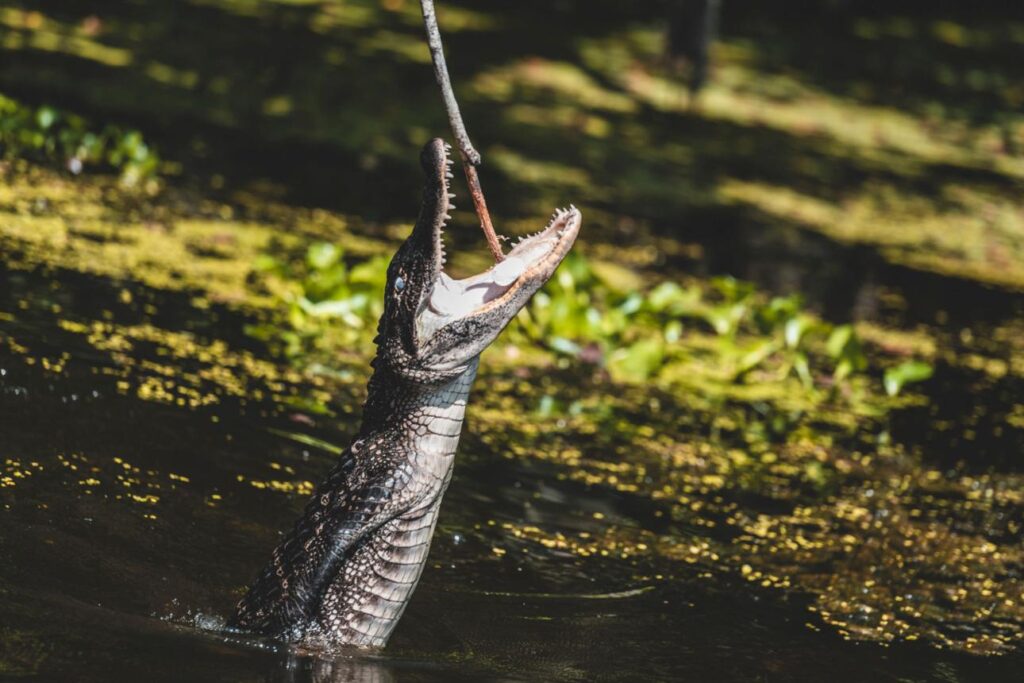
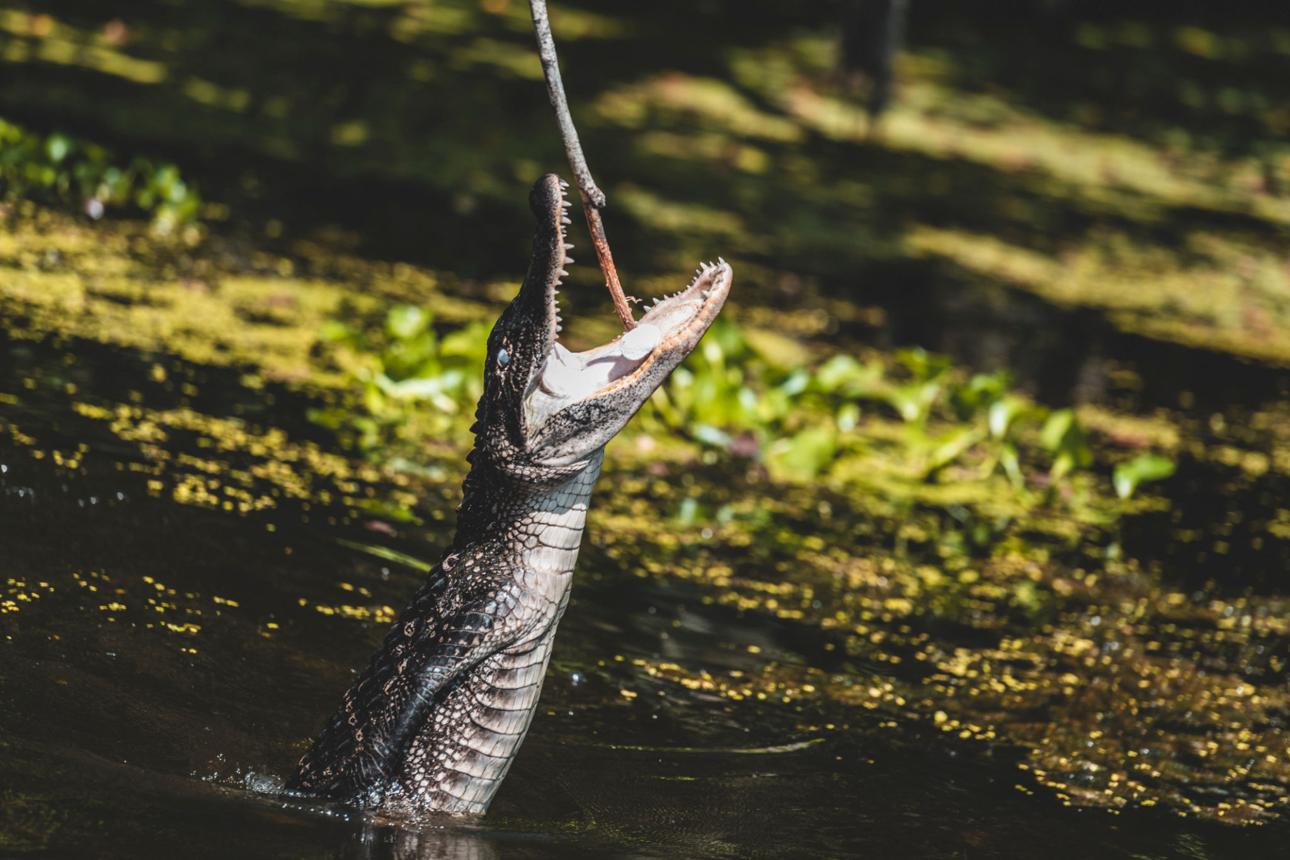
An alligator suddenly surfaced in a burst of water and movement.
The fisherman later reportedly described the moment as complete surprise. One second he believed he was fighting a quality fish, and the next he found himself staring at one of the largest predators in the lake thrashing near his line.
“I thought I had a really good bass,” he reportedly told friends afterward. “Then everything exploded beside the boat.”
Why Alligators Sometimes Go After Hooked Fish
While encounters like this might sound rare, wildlife experts say they happen more often than many anglers realize in areas with healthy alligator populations.
According to the Texas Parks and Wildlife Department, American alligators are opportunistic predators that feed on fish, birds, turtles, mammals, and other prey that become easy targets. A struggling fish attached to a fishing line creates movement and vibration that can immediately attract attention underwater.
For an alligator, a hooked fish often represents an easy meal.
The splashing, erratic movement of a fish being reeled toward a boat sends strong signals through the water. In lakes, rivers, and marsh systems where alligators are common, fishermen occasionally report reptiles attempting to steal hooked fish before they ever reach shore or the boat.
Most of the time, the encounters are brief.
But they are almost always memorable.
South Texas Has More Alligators Than Many People Realize
Although many people associate alligators mainly with states like Florida or Louisiana, Texas supports a substantial alligator population as well.
According to the Texas Parks and Wildlife Department, alligators inhabit wetlands, rivers, marshes, reservoirs, and freshwater systems across much of East, Southeast, and coastal Texas. In portions of South Texas, healthy aquatic habitat combined with abundant prey allows gators to thrive in places many anglers fish regularly.
Most fishermen who spend enough time on Texas lakes eventually encounter one.
Sometimes it is a gator quietly sunning itself near the shoreline. Other times, an animal slips silently beneath the water near flooded timber or thick vegetation. Most encounters remain harmless because alligators typically avoid people whenever possible.
Still, moments like this serve as a reminder that anglers are sharing the water with powerful predators.
A Calm Morning Suddenly Felt Different
As the water churned near the boat, the fisherman reportedly realized the alligator seemed completely focused on whatever had been fighting on the line.
For a few tense moments, the fishing trip stopped feeling routine.
That is one thing experienced outdoorsmen often understand well. Nature has a way of reminding people who really belongs there. Hours of quiet fishing can make a lake feel peaceful and predictable, but one sudden encounter with a large predator changes the atmosphere immediately.
Eventually, the fish disappeared during the chaos, either throwing the hook or becoming part of the alligator’s breakfast.
Just as suddenly as it surfaced, the gator reportedly slipped back beneath the water.
The lake returned to silence.
The birds kept moving.
The shoreline looked exactly the same.
But the morning no longer felt ordinary.
Why Anglers Should Stay Alert in Gator Country
Wildlife officials say encounters between anglers and alligators are usually harmless, but caution still matters.
According to recommendations from the Texas Parks and Wildlife Department, anglers fishing in areas known for alligator populations should avoid feeding wildlife, maintain distance from large reptiles, and avoid approaching animals that appear territorial or unusually comfortable around people.
Most alligators prefer avoiding confrontation, but food-related situations can sometimes make behavior less predictable.
A struggling fish near a boat can quickly become something worth investigating.
The Bottom Line
For one South Texas fisherman, what started as an ordinary bass trip turned into the kind of outdoor story that gets told for years afterward.
He thought he had hooked a quality bass after a slow morning on the water. Instead, the surface erupted beside the boat, and a large alligator suddenly entered the picture.
Because in parts of Texas, anglers are not always the only predators paying attention to what is happening beneath the surface.