
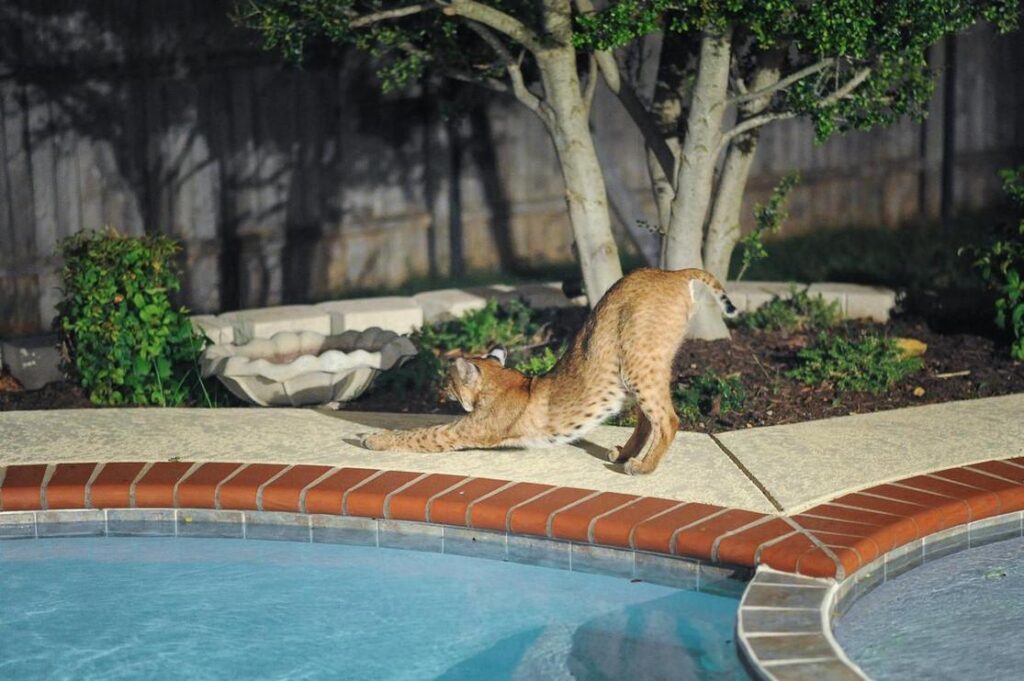
Family Walks Outside Near Lake LBJ—Finds Unexpected Visitor Swimming in Backyard Pool

A quiet morning near Lake LBJ turned into something straight out of a Hill Country wildlife story after a family reportedly stepped outside to discover an unexpected visitor paddling laps in their backyard swimming pool.
It was not a dog.
Not a deer.
And definitely not something they expected to see before coffee.
According to the homeowners, the animal swimming in the water appeared to be a full-grown bobcat, frantically circling the edge of the pool while trying to find a way out.
For longtime Texas residents, wildlife sightings are nothing new around the Highland Lakes. Deer wander through yards regularly. Foxes occasionally show up near boat docks. Even the occasional mountain lion sighting sparks neighborhood conversations. But a bobcat swimming in a backyard pool?
That got attention quickly.
A Hill Country Wildlife Surprise
The incident reportedly happened near the Lake LBJ area, where homes back up to thick brush, rocky terrain, and creek systems that naturally support wildlife movement. According to neighbors, the family initially thought something looked unusual in the pool before realizing the animal pacing through the water was a bobcat.
The homeowner reportedly described the moment as equal parts surprising and unsettling.
At first glance, they reportedly thought it might have been a large house cat struggling in the water. But after getting closer, the tufted ears, muscular build, and unmistakable face made it obvious this was something much wilder.
The animal appeared exhausted after repeated attempts to climb out.
Bobcats Are More Common Than People Realize
For many Texans, seeing a bobcat still feels rare.
The reality is they are around far more often than most people know.
According to the Texas Parks and Wildlife Department, bobcats live throughout nearly every region of Texas and are highly adaptable animals. They thrive in rocky terrain, brush country, wooded creek bottoms, and increasingly around suburban areas where food and cover still exist.
Most people simply never notice them.
Bobcats tend to move quietly and avoid human interaction whenever possible. They are primarily active around dawn and dusk, which means many sightings happen unexpectedly and disappear just as quickly.
According to Texas Parks and Wildlife, bobcats generally pose very little danger to people and tend to avoid confrontation.
Still, finding one swimming in your backyard pool changes the experience a little.
Why Wild Animals End Up in Pools
Wildlife experts say situations like this happen more than many homeowners realize.
Animals chasing prey, fleeing predators, or simply looking for water can accidentally fall into pools and struggle to escape. Smooth pool walls make climbing out nearly impossible for many animals, particularly exhausted wildlife.
According to wildlife rehabilitation organizations across Texas, raccoons, deer, snakes, coyotes, and even bobcats occasionally end up trapped in residential pools.
In many cases, homeowners are encouraged to avoid approaching stressed animals and instead give them room or contact wildlife officials if needed.
Fortunately, in this case, neighbors reportedly helped create an escape route by placing objects near the pool edge, eventually allowing the animal to climb out safely.
Living Close to Wild Country
For many Lake LBJ residents, moments like this are simply part of living near wild spaces.
The Hill Country remains full of wildlife corridors where animals regularly travel between food, cover, and water sources. As more neighborhoods expand into traditionally rural areas, encounters between people and wildlife naturally become more common.
According to the Texas Parks and Wildlife Department, homeowners living near wooded areas should expect occasional visits from native species and avoid intentionally feeding wildlife or leaving pet food outdoors.
That advice becomes especially important when predators like bobcats begin passing through neighborhoods.
The Bottom Line
A family near Lake LBJ recently got an unexpected reminder that living in Texas Hill Country sometimes comes with surprises—especially when nature decides to show up in your backyard.
According to the Texas Parks and Wildlife Department, bobcats remain common across much of Texas, even if most people rarely spot them.
Still, seeing one casually swimming in your pool before breakfast?
That is probably not how most homeowners expect to start their morning.