

At first, the losses did not seem unusual.
A missing calf here. Another found dead weeks later. Coyotes quickly became the obvious suspect, at least according to one Central Texas rancher who had spent decades raising cattle and dealing with predators the old-fashioned way.
But something about the kills felt different.
The calves were larger than what coyotes typically targeted. Some carcasses appeared partially covered with brush and dirt. Others showed unusual bite patterns that did not quite match what the rancher had seen before.
So, after weeks of frustration, he decided to do what many landowners now rely on:
He put up cameras.
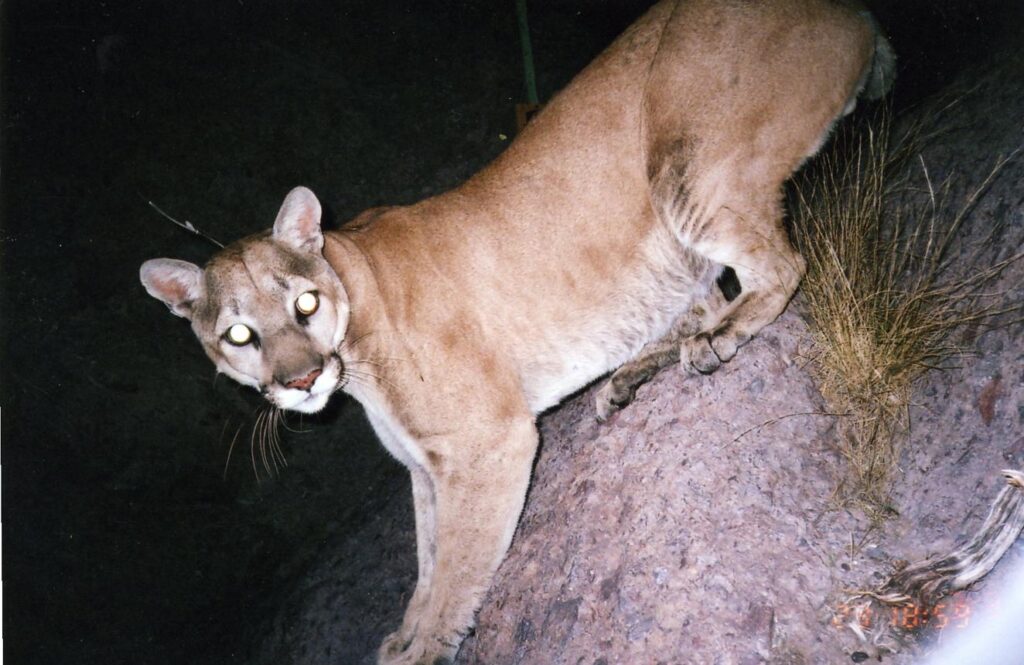
And what showed up on those trail cams was not what most people expected.
Missing Calves Raise Questions
The story echoes several real predator incidents that ranchers across Texas have faced in recent years, especially in areas where large predators are quietly reappearing.
According to ranchers in parts of Central Texas and the Hill Country, livestock losses tied to unknown predators have become an increasingly common concern. In many cases, coyotes get blamed immediately because they remain the most widespread predator affecting calves, goats, and smaller livestock.
But experienced ranchers know something important:
Not every kill looks the same.
This rancher reportedly began noticing odd signs after multiple calves disappeared over several weeks. A few carcasses were later discovered, but the injuries seemed inconsistent with typical scavenger behavior.
There were signs of drag marks.
Brush had been pulled over parts of carcasses.
And some kills appeared far cleaner than what many ranchers associate with coyotes.
That raised concerns.
Cameras Start Revealing a Different Story
After setting up multiple trail cameras near water tanks, fence crossings, and known livestock bedding areas, the rancher finally got answers.
At first, the nighttime footage mostly showed what you would expect.
Coyotes.
Feral hogs.
Deer moving through the property.
Then came something unexpected.
A large cat-like figure appeared crossing the property after dark.
The animal moved quietly, low to the ground, passing near calf bedding areas before disappearing back into heavy brush.
Additional footage later reportedly captured what appeared to be the same predator revisiting portions of the ranch.
The suspicion quickly shifted toward something many Texans still debate whenever livestock disappears:
A mountain lion.
Mountain Lions in Texas Still Spark Debate
For many people, the idea of mountain lions roaming Texas still sounds surprising.
The reality is more complicated.
According to the Texas Parks and Wildlife Department, mountain lions are found across parts of Texas, particularly in West Texas and South Texas, but sightings in Central Texas and the Hill Country continue to surface regularly. Wildlife officials note that while breeding populations are not officially confirmed in many parts of Central Texas, dispersing lions—particularly younger males—can travel enormous distances.
That matters for ranchers.
According to Texas Parks and Wildlife, mountain lions are opportunistic predators capable of taking livestock, including calves, goats, sheep, and smaller animals when opportunities present themselves.
And unlike coyotes, mountain lions often leave behind clues.
Large cats commonly:
- Drag prey to cover
- Partially bury carcasses
- Feed differently than scavengers
- Return to kills repeatedly
For experienced ranchers, those signs can become telling.
Coyotes Still Cause Major Problems
That does not mean coyotes suddenly stop being the problem.
According to Texas A&M AgriLife Extension Service, coyotes remain one of the most significant predators impacting Texas livestock operations, particularly during calving season. Ranchers lose calves every year to coyotes, especially smaller or vulnerable newborns.
But wildlife specialists also note something important:
Predator identification matters.
Treating every livestock loss like a coyote problem can sometimes lead ranchers to miss what is actually happening.
And in some cases, cameras tell a much different story.
Living With Predators Is Part of Ranch Life
For ranchers, predator management has always been part of doing business.
It is not glamorous.
It is expensive.
And sometimes frustrating.
Many landowners spend thousands each year on:
- Trail cameras
- Predator control
- Fencing improvements
- Night patrols
- Livestock protection measures
Yet predators still find ways to surprise people.
Especially at night.
The Bottom Line
According to the Texas Parks and Wildlife Department and Texas A&M AgriLife Extension Service, both coyotes and mountain lions can create serious problems for ranchers when livestock losses begin piling up.
For one Texas rancher, trail cameras may have finally explained what was happening after weeks of missing calves and strange kill patterns.
The bigger reminder?
Sometimes what you think is causing the problem is not what is actually showing up after dark.
And in ranch country, cameras are increasingly revealing stories nobody expected to see.