
How Bullet Grain and Accuracy Work Together

Choosing the right bullet grain for your rifle isn’t just a technical detail—it directly impacts accuracy, recoil, and overall performance in the field. Pair that with solid shooting fundamentals, and you can dramatically improve your consistency whether you’re at the range or on a hunt.
Many hunters overlook bullet selection, assuming any factory load will do. But understanding grain weight—and how it works with your rifle—can be the difference between tight groups and frustrating misses.
What Bullet Grain Actually Means
Bullet grain refers to the weight of the projectile. It’s measured in grains, with 7,000 grains equaling one pound. Lighter bullets (lower grain) typically travel faster, while heavier bullets (higher grain) carry more momentum and energy.
According to ballistics guidance published by the National Shooting Sports Foundation, different grain weights can significantly affect trajectory, recoil, and terminal performance.
In simple terms:
- Lighter grains = higher velocity, flatter trajectory
- Heavier grains = more penetration, better energy retention
But the “best” option depends on your rifle and your purpose.
Matching Bullet Grain to Your Rifle’s Twist Rate
One of the most important—and often overlooked—factors is your rifle’s twist rate. This determines how well your barrel stabilizes different bullet weights.
Faster twist rates (like 1:8 or 1:9) stabilize heavier, longer bullets better. Slower twist rates (like 1:10 or 1:12) tend to perform best with lighter bullets.
According to technical shooting data and barrel guidance referenced by Hornady Manufacturing, using a bullet that doesn’t match your twist rate can lead to poor accuracy, inconsistent groups, and even instability in flight.
Before choosing a grain weight, it’s worth checking your rifle’s twist rate—usually stamped on the barrel or listed by the manufacturer.
Choosing the Right Grain for Your Intended Use
Your hunting style and target species should also guide your choice.
For example:
- Whitetail deer: Mid-weight bullets often provide the best balance of speed and penetration
- Elk or larger game: Heavier grains offer deeper penetration and better energy transfer
- Long-range shooting: Higher grain, high-BC bullets resist wind drift better
Ballistic insights from Nosler Inc. show that heavier bullets tend to perform better at longer distances due to improved energy retention and aerodynamic efficiency.
The key is matching your bullet to your real-world scenario—not just what looks best on paper.
Start With Factory Recommendations, Then Test
Most ammunition manufacturers provide recommended grain ranges for specific calibers. That’s a good starting point.
From there, the best approach is simple: test different loads.
Try a few different grain weights within your caliber and compare group sizes at the range. According to accuracy testing principles supported by the Federal Premium Ammunition, every rifle has its own “preference,” and finding it requires hands-on testing.
What works great in one rifle may not perform the same in another.
Consistency Matters More Than Chasing Numbers
One of the biggest mistakes shooters make is constantly switching between ammo types.
Once you find a grain and load that groups well, stick with it. Consistency builds familiarity, and familiarity leads to better shooting performance over time.
Steps to Improve Rifle Accuracy in the Field
Choosing the right bullet is only part of the equation. Accuracy comes from a combination of equipment, technique, and practice.
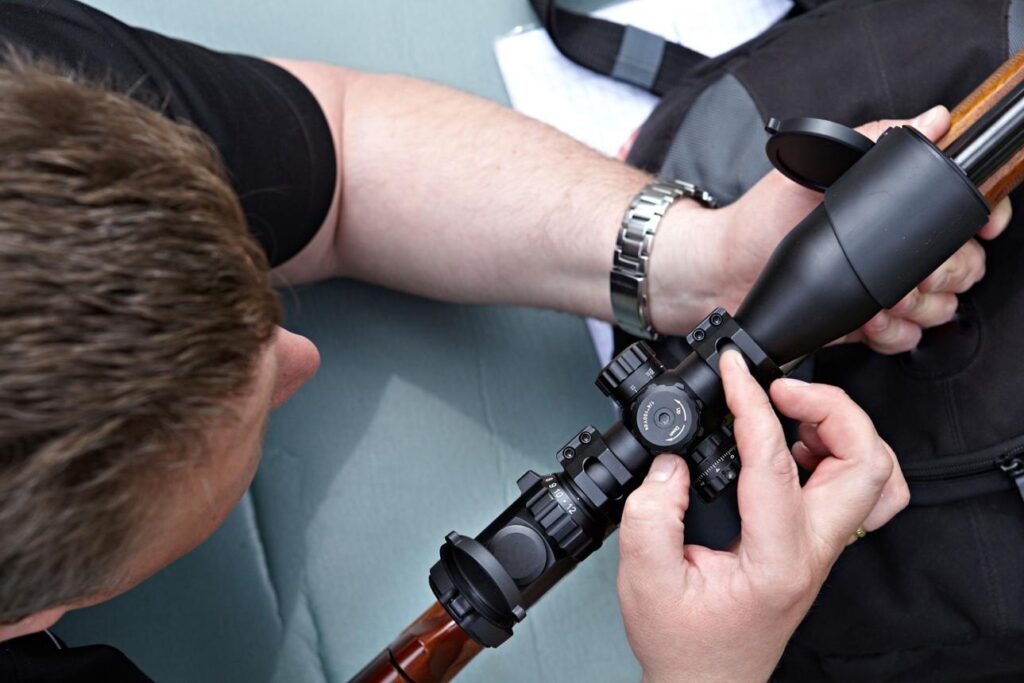
Dial In Your Optics the Right Way
A properly zeroed scope is critical. Take the time to sight in your rifle at a known distance—typically 100 yards—and confirm your zero before hunting season.
Small adjustments can make a big difference, especially at longer distances.
Focus on Stable Shooting Positions
Your shooting position matters just as much as your rifle setup. Use a bipod, shooting sticks, or natural rests whenever possible.
A stable platform reduces movement and helps you make more consistent shots.
Control Your Breathing and Trigger Pull
Accuracy often comes down to fundamentals. Slow your breathing, exhale slightly, and squeeze the trigger smoothly—don’t jerk it.
According to shooting fundamentals taught in hunter education programs supported by the U.S. Fish and Wildlife Service, proper trigger control is one of the most important factors in consistent accuracy.
Practice at Realistic Distances
It’s one thing to shoot tight groups at the range—it’s another to perform under real hunting conditions.
Practice from field positions, at varying distances, and under time constraints. The more realistic your practice, the more confident you’ll be when it counts.
Keep Your Rifle Maintained
A clean, well-maintained rifle performs better. Fouled barrels, loose mounts, or worn components can all impact accuracy.
Regular maintenance ensures your rifle performs the way it should every time you pull the trigger.
The Bottom Line
Choosing the right bullet grain isn’t about picking the heaviest or fastest option—it’s about finding what works best for your rifle and your style of hunting.
Pair that with solid fundamentals and consistent practice, and you’ll see a noticeable improvement in your accuracy.
At the end of the day, accuracy isn’t just about equipment—it’s about understanding how everything works together and putting in the time to get it right.