
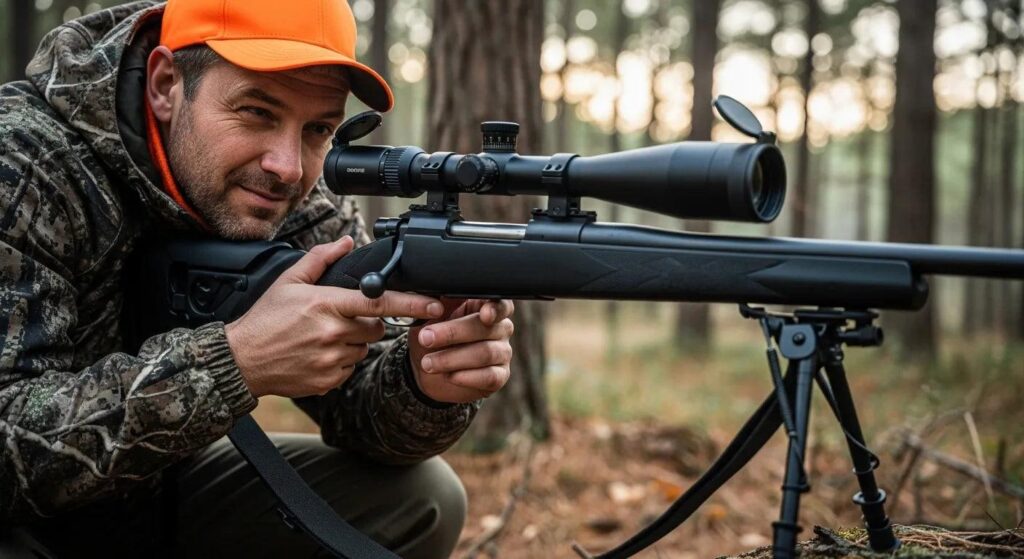
Most Hunters Don’t Need Magnum Rifles—But Still Buy Them Anyway

Walk into almost any gun store before hunting season, and the pattern becomes easy to spot.
Hunters preparing for whitetail season regularly find themselves staring at rifles chambered in cartridges like the .300 Winchester Magnum, 7mm Remington Magnum, or newer long-range options promising blistering speed and extreme distance. Marketing often emphasizes flatter trajectories, more power, and long-range performance that sounds hard to ignore.
Yet for most hunters, especially deer hunters, the truth is much simpler:
They probably do not actually need a magnum rifle.
That reality, however, has never stopped hunters from buying them.
Most Hunting Happens Much Closer Than People Admit
For all the attention long-range hunting receives online, the average hunting shot remains surprisingly short.
According to the National Deer Association and hunter surveys across much of the country, most whitetail deer are harvested well inside 200 yards. In many parts of Texas, particularly brush country or feeder hunting situations, shots often happen closer than 150 yards.
At those distances, standard hunting cartridges perform extremely well.
Rounds such as the .270 Winchester, .308 Winchester, 6.5 Creedmoor, .30-06 Springfield, and even traditional cartridges like the .30-30 have been cleanly harvesting deer for generations. For typical deer-sized game inside ordinary hunting ranges, magnum performance often provides far more energy than necessary.
That does not make magnum rifles bad.
It simply means most hunters rarely use what makes them special.
Magnum Rifles Come With Tradeoffs
More power sounds appealing until the tradeoffs show up.
Magnum rifles generally produce more recoil, louder muzzle blast, heavier rifles, and more expensive ammunition. According to many shooting instructors and experienced hunters, recoil becomes especially important because it directly affects confidence and accuracy.
A hunter flinching behind a hard-kicking rifle often shoots worse.
That reality matters more than ballistics charts. According to hunter education programs promoted by the Texas Parks and Wildlife Department, shot placement consistently matters far more than excessive power when ethically harvesting game.
An accurate shot from a familiar rifle almost always beats a poor shot from something larger.
So Why Do Hunters Still Buy Magnum Rifles?
Because hunters are still hunters.
Part of the answer comes down to confidence. Many hunters simply enjoy knowing they have extra capability, even if they rarely need it. Carrying a magnum creates reassurance, especially for hunters who may someday chase elk, mule deer, or larger game where additional energy and longer range become more useful.
Another reason feels harder to admit.
Magnums are fun.
There is something undeniably appealing about powerful rifles. Hunters enjoy talking about them, comparing ballistics, and imagining scenarios where that extra performance suddenly matters. A rifle chambered in .300 Win Mag simply feels different than carrying something smaller, even if both accomplish the same job most of the time.
Then there is the “just in case” factor.
Many hunters buy rifles preparing for situations they may never encounter. A Texas deer hunter shooting senderos at 120 yards may still convince himself he needs a cartridge capable of reaching 600 yards because someday, somehow, the opportunity might arise.
There Are Times When Magnums Truly Make Sense
None of this means magnum rifles lack purpose.
Hunters chasing elk, moose, western mule deer, or hunting wide-open country where longer shots become realistic often benefit from additional energy and flatter trajectories. In mountain hunting situations or windy conditions, magnums can absolutely provide advantages.
The key difference involves honesty.
A hunter regularly shooting long distances or pursuing larger game may genuinely benefit from magnum performance. Someone hunting whitetails from a South Texas blind at 100 yards probably will not notice much practical difference beyond recoil and ammo cost.
That does not mean buying one is wrong.
It simply means many hunters buy magnums because they want them, not because they truly need them.
The Bottom Line
Most hunters probably do not need magnum rifles.
For ordinary deer hunting, especially inside typical ranges, standard cartridges have quietly proven themselves for generations. They recoil less, cost less to shoot, and often help hunters place shots more confidently.
Still, magnum rifles remain incredibly popular for one simple reason:
Hunters do not always buy rifles based purely on necessity.
Sometimes they buy them because powerful rifles are fun, confidence matters, and deep down, most hunters enjoy the idea of having a little more rifle than they actually need.