
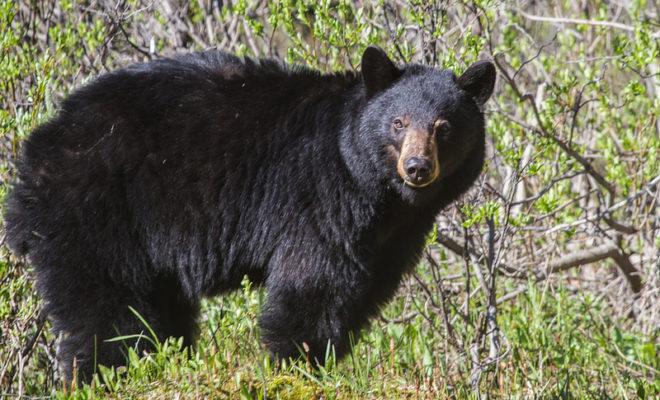
Ranch Owner Shocked After Black Bear Appears on South Texas Property—Wildlife Officials Say It Is Happening More Often. Studies Show the Black Bear is Recovering Faster Than Expected.

For one South Texas ranch owner, checking trail cameras reportedly turned into a surprise he never expected to see.
According to the landowner, the property typically produces the usual mix of wildlife common to South Texas—whitetail deer, hogs, coyotes, bobcats, and the occasional mountain lion rumor that may or may not prove real. But one recent image reportedly stopped everyone in their tracks.
Walking through thick brush near a sendero sat something most people never expect to see in South Texas.
A black bear.
At first, the ranch owner reportedly assumed the image had to be a mistake.
The shape looked unusual enough that some family members initially guessed it might be a large hog caught at an odd angle or even a prank photo somehow ending up on the camera card. But after reviewing multiple images and speaking with wildlife officials, the answer reportedly became clear.
It was definitely a black bear.
Black Bears Are Showing Up in More Parts of Texas
While black bears may sound unusual to many Texans, wildlife experts say sightings have quietly increased across parts of the state.
According to the Texas Parks and Wildlife Department, black bear populations are slowly expanding in portions of Texas after decades of decline. Bears once ranged across much of the state, including East Texas, Central Texas, and areas stretching into the Hill Country and South Texas before habitat loss and hunting pressure dramatically reduced numbers by the early 1900s.
Today, bears have begun returning.
According to Texas Parks and Wildlife, breeding populations currently exist in West Texas near the Mexican border and the Trans-Pecos region, while occasional sightings increasingly occur in unexpected places as younger bears naturally disperse into new territory. Bears moving north from Mexico have become especially important to Texas’ recovering population. According to wildlife officials, sightings have steadily increased in South Texas brush country, the Hill Country, and portions of Central Texas. (tpwd.texas.gov)
That growing presence explains why sightings that once felt impossible no longer surprise wildlife biologists.
Even if they still surprise ranchers.
Why Bears Are Moving Into New Areas
According to wildlife researchers, expanding bear populations often create a simple problem:
Young bears need room.
Male black bears, in particular, can travel long distances searching for food, territory, and mates. According to Texas Parks and Wildlife guidance, some dispersing bears cover hundreds of miles, occasionally appearing in areas where locals have not seen bears in generations. That movement partly explains sightings near ranches, highways, feeders, and remote properties outside traditional bear range. (tpwd.texas.gov)
South Texas offers something bears like.
Brush cover, water sources, thick habitat, and food opportunities ranging from cactus fruit and insects to carrion and natural browse can make portions of ranch country surprisingly attractive for wandering animals.
For ranchers unfamiliar with seeing bears, however, the first encounter tends to feel unforgettable.
Because few people checking trail cameras expect to suddenly find something that looks more like Colorado than Texas.
Black Bears Are Not the Threat Many People Assume
Despite the surprise factor, wildlife officials generally describe black bears as shy animals that avoid people whenever possible.
According to the Texas Parks and Wildlife Department, black bear attacks remain extremely rare, and most sightings end with the animal quietly moving on. Officials encourage landowners to avoid feeding bears, secure attractants when possible, and report unusual activity if conflicts develop.
Most bears passing through Texas ranch country reportedly do exactly that:
Pass through.
Still, sightings continue generating excitement because they signal something larger happening in the state.
A Quiet Wildlife Comeback
For decades, many Texans assumed black bears had largely disappeared outside remote parts of West Texas.
That is no longer true.
According to Texas Parks and Wildlife, conservation efforts, changing attitudes toward predators, and healthy populations moving north from Mexico have helped black bears slowly reclaim portions of their historic range. While Texas remains far from having widespread bear populations, sightings today happen far more frequently than they did twenty or thirty years ago. (tpwd.texas.gov)
For outdoorsmen, that comeback feels notable.
Because anytime wildlife returns to places it once disappeared from, people tend to pay attention.
The Bottom Line
For one South Texas ranch owner, a routine trail camera check reportedly turned into a surprise after images revealed a black bear moving across the property.
While the sighting felt unusual, wildlife officials say it reflects a much larger trend happening across Texas. Black bears are quietly making a comeback, expanding into areas where they have not regularly appeared for generations.
And for more ranchers across Texas, that means one thing is becoming increasingly possible:
The next unusual set of tracks might not belong to a hog, deer, or coyote after all.
W H Y . . . didn’t YOU ID at Least THE 1 (out of 254) County where this event occurred; if it’s TRUE?