
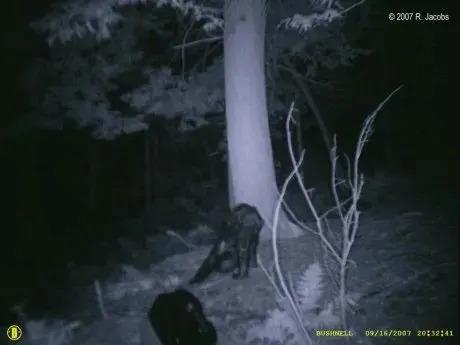
For one Texas rancher, the mystery reportedly started with a trail camera notification that seemed easy to dismiss. A motion alert appeared overnight near a familiar game trail, but when he checked the image, there was nothing obvious in frame. At first, he assumed wind had moved nearby brush or that a deer simply crossed too quickly for the camera to fully capture.
Then the alerts continued.
According to the rancher, cameras positioned across different parts of the property began triggering during overnight hours, often between midnight and early morning. Yet each time he checked the photos, the results looked frustratingly similar. One image appeared to show movement at the edge of the frame. Another captured what looked like glowing eyes disappearing into darkness. Several photos showed nothing at all despite repeated motion alerts.
The strange part was not that cameras triggered.
It was that something consistently seemed present without ever appearing clearly enough to identify.
A Pattern Began Emerging
According to the rancher, what first felt random gradually started looking more deliberate. The same cameras triggered repeatedly, particularly near creek crossings, livestock pens, and heavily traveled wildlife trails. Several alerts even arrived within minutes of one another despite cameras sitting hundreds of yards apart.
That pattern reportedly raised new questions.
If the issue involved faulty equipment, why did the triggers happen in the same areas? If animals caused the movement, why did nothing ever remain visible long enough to identify? And if something larger moved through the property, why did it seem to avoid the camera entirely?
After several weeks, curiosity reportedly replaced frustration.
The rancher wanted answers.
Trail Cameras Often Capture More Than Expected
For many Texas ranchers and hunters, trail cameras quietly become some of the most valuable tools on a property. Most are initially installed to monitor deer movement, predator activity, livestock, or gate access. Over time, however, cameras frequently reveal far more than expected.
According to the Texas Parks and Wildlife Department, trail cameras regularly document nocturnal animals rarely seen in daylight, including coyotes, bobcats, feral hogs, and in some regions, mountain lions. Because many predators move almost exclusively after dark, cameras often provide the first evidence that something unusual has passed through an area.
That possibility reportedly stayed in the rancher’s mind.
The movement looked too consistent to completely ignore.
The Photos Raised More Questions Than Answers
According to the rancher, a handful of images stood out enough to feel unsettling. One reportedly captured part of a large shape crossing behind mesquite brush before disappearing entirely. Another showed only a pair of reflected eyes near a fence line, too low and indistinct to identify. In one case, a camera activated repeatedly for nearly twenty minutes without producing a single useful image.
The uncertainty reportedly became the most frustrating part.
Deer generally showed up clearly. Hogs usually left rooting damage. Coyotes often appeared in groups and moved predictably through senderos. Yet whatever kept triggering the cameras left little evidence beyond vague movement and incomplete images.
Without tracks or clear photos, possibilities remained wide open.
A predator moving quickly through cover seemed possible. A wandering dog could explain some movement. The rancher even briefly wondered whether someone might occasionally cross the property after dark.
Still, nothing fit perfectly.
Ranchers Say Strange Trail Camera Activity Is Surprisingly Common
Spend enough time around hunters or rural landowners, and stories involving strange trail camera photos appear almost inevitable. Fast-moving animals, insects near infrared sensors, shifting temperatures, shadows, and wind-blown brush all create confusing nighttime images that can make ordinary activity appear unusual.
Wildlife experts note that animals moving too close to cameras frequently become distorted or partially hidden, particularly at night when infrared flashes limit image clarity.
Still, experienced landowners tend to trust instinct.
When unusual patterns repeat often enough, most start paying closer attention.
That reportedly explains why the rancher repositioned several cameras, adjusted viewing angles, and began checking nearby roads and creek crossings more carefully for tracks.
Because eventually, unanswered questions become hard to ignore.
The Bottom Line
For one Texas rancher, repeated trail camera alerts gradually turned into an unexpected mystery after something consistently triggered motion sensors without ever fully appearing in frame.
The explanation may prove ordinary.
A predator moving through brush, wildlife slipping past the lens, or simple camera limitations could explain the strange images.
Still, when something repeatedly shows up just enough to raise questions, many ranchers start paying closer attention.
Especially after dark.