

Walk into any tackle shop and you’ll quickly see that bass fishing rods come in hundreds of different styles. Rod length, power, action, spinning setups, baitcasting reels—it’s enough to overwhelm many anglers, especially beginners trying to buy their first bass rod.
But the truth is simpler than it appears. Most bass anglers can cover the majority of fishing situations with just a few well-chosen rod setups. Choosing the right rod can dramatically improve casting accuracy, lure control, and hook-setting power.
According to bass fishing experts at Bassmaster, selecting a rod that matches the lure type and fishing technique is one of the most important factors in consistently catching bass. A properly matched rod allows anglers to feel bites more easily and control fish more effectively once hooked.
Understanding a few basic concepts can help anglers confidently choose the right rod for bass fishing.
Spinning Rods vs. Baitcasting Rods
The first decision most anglers face is choosing between spinning gear and baitcasting gear.
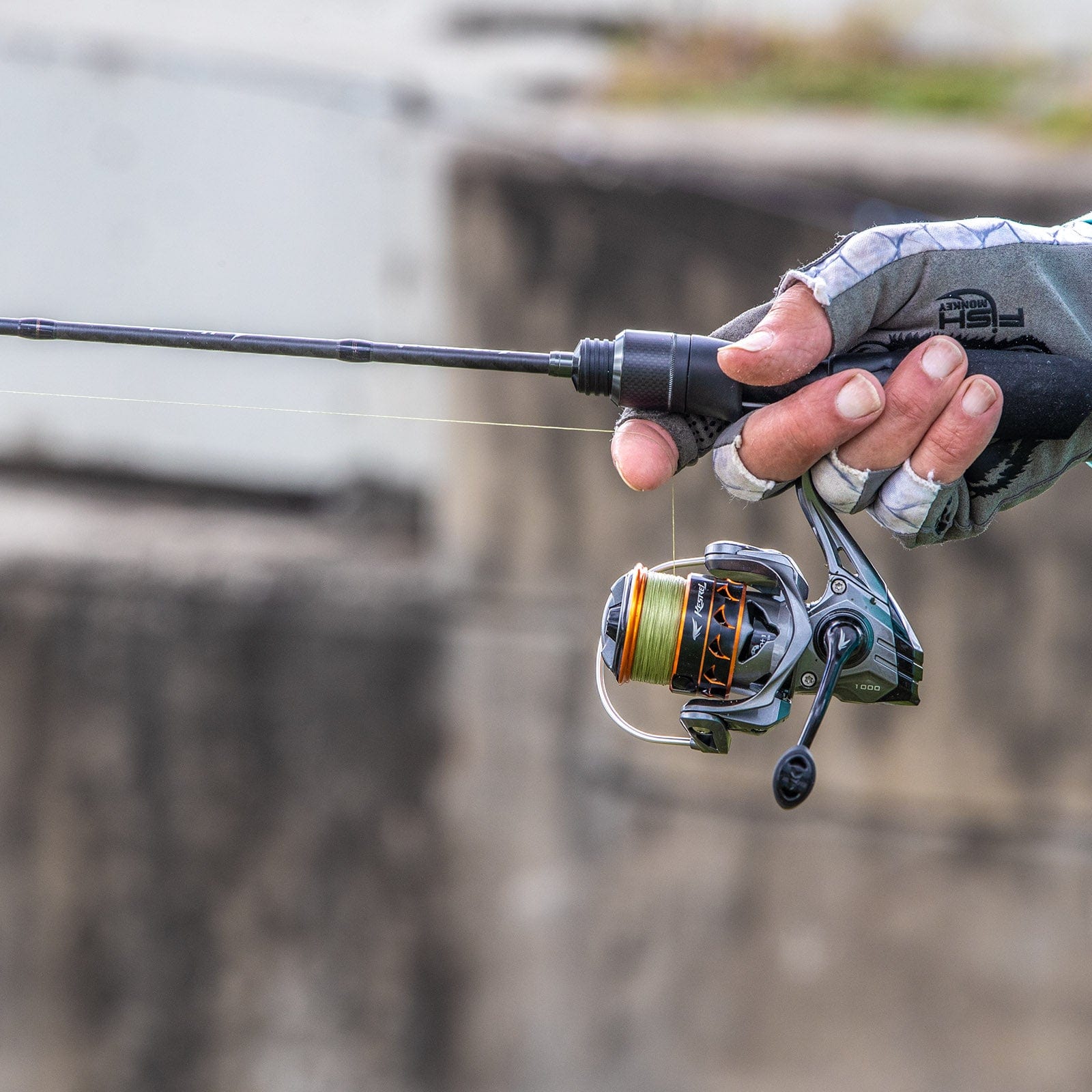
Spinning rods are generally the best option for beginners. They are easier to learn, work well with lighter lures, and are less prone to backlash problems. According to Field & Stream, spinning rods are particularly effective for finesse techniques such as drop shots, shaky heads, Ned rigs, and small soft plastics.
Baitcasting rods, on the other hand, offer greater casting accuracy and power. These rods are commonly used for heavier lures and techniques that require pulling fish out of thick cover. Experienced anglers often rely on baitcasting setups for jigs, spinnerbaits, crankbaits, and flipping techniques.
Most serious bass anglers eventually use both types depending on the situation.
Rod Length Matters More Than You Think
Rod length affects both casting distance and control. Longer rods generally cast farther and provide more leverage when fighting fish, while shorter rods allow for more precise casts around tight cover.
Bass fishing experts at Bassmaster report that rods between 6 feet 6 inches and 7 feet 3 inches are the most versatile for bass fishing.
For beginners, a rod around seven feet long is often the best all-around choice. It provides good casting distance while still maintaining control when fishing around structure.
Understanding Rod Power
Rod power refers to the strength of the rod—how much pressure it takes to bend it. This is usually classified as light, medium, medium-heavy, or heavy.
Medium rods work well for lighter lures and finesse fishing, while medium-heavy rods are considered one of the most versatile options for bass fishing.
According to gear analysts at Outdoor Life, many anglers consider a medium-heavy rod to be the best all-purpose power for bass fishing because it can handle a wide range of lure types and fish sizes.
Heavy rods are typically used for techniques like flipping or punching thick vegetation where extra strength is needed.
Rod Action: Fast vs. Moderate
Rod action describes where the rod bends when pressure is applied.
Fast-action rods bend mostly near the tip and are ideal for techniques that require quick hook sets. These rods are commonly used for soft plastics, jigs, and worm fishing.
Moderate-action rods bend farther down the rod and are often used with moving lures like crankbaits and spinnerbaits.
Fishing experts say fast-action rods are the most versatile choice for beginners because they provide better sensitivity and hook-setting power.
Matching the Rod to Your Lures
One of the biggest mistakes anglers make is using the wrong rod for the lure they are throwing.
Light finesse lures require more flexible rods that allow the bait to move naturally. Heavy lures, on the other hand, require stronger rods that can cast them properly and drive hooks into fish.
According to Bassmaster, anglers should choose rods that match the weight range of the lures they plan to use most often.
Matching the rod to the lure improves both casting performance and hook-up success.
The Best All-Around Bass Rod Setup
For anglers who want one versatile rod to start with, many experts recommend a simple setup.
A 7-foot medium-heavy rod with fast action paired with either a spinning or baitcasting reel can handle a wide variety of bass fishing techniques. This setup works well for soft plastics, spinnerbaits, chatterbaits, and even some crankbaits.
Outdoor gear reviewers at Outdoor Life note that this style of rod is often considered the “workhorse” of bass fishing because it performs well in many different situations.
Why the Right Rod Makes a Difference
Choosing the correct fishing rod is about more than comfort—it directly impacts fishing success. The right rod improves sensitivity, allowing anglers to detect subtle bites, while also providing the power needed to land fish.
As anglers gain experience, many eventually build a collection of rods tailored to specific techniques. But starting with a versatile rod and understanding the basics of rod length, power, and action will set any angler on the right path.
For bass fishermen chasing their next big catch, the right rod can make the difference between a missed opportunity and a fish in the boat.