
The Texas Killing Fields: A Dark Legacy Reignited by a New Arrest

For decades, a stretch of land along the Texas Gulf Coast has carried a name that still unsettles even the most seasoned investigators: the “Texas Killing Fields.”
Now, with a recent arrest tied to one of the long-unsolved cases, that name is once again making headlines—dragging a chilling chapter of Texas history back into the present.
What Are the Texas Killing Fields?
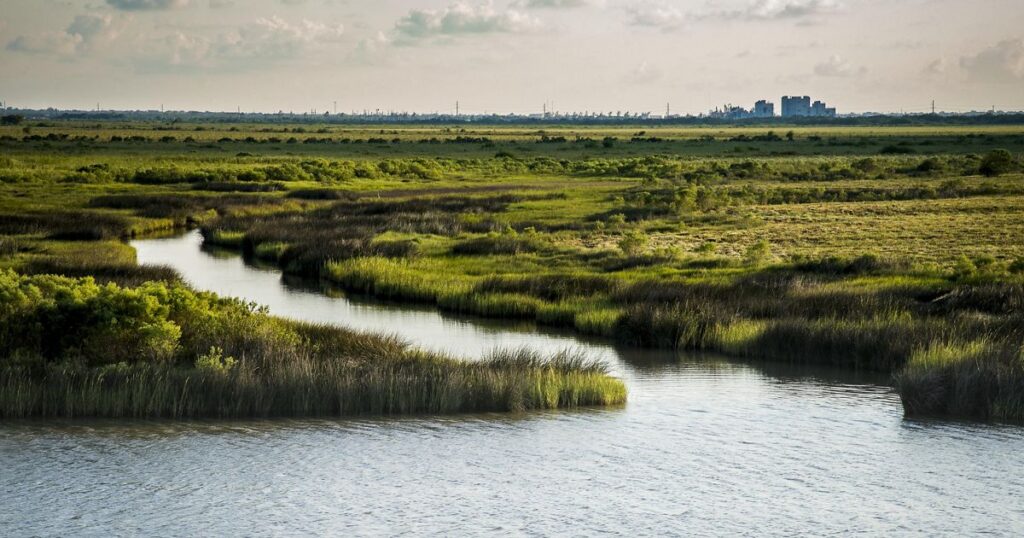
The term “Texas Killing Fields” refers to a series of remote areas near Interstate 45 between Houston and Galveston, particularly around League City and the infamous Calder Road. These quiet, overgrown fields became the dumping grounds for multiple victims—primarily young women and girls—spanning several decades.
Many of the cases date back to the 1970s through the early 2000s. Victims often vanished along the I-45 corridor, a heavily traveled route connecting major cities and coastal communities. Some were last seen hitchhiking, others leaving work, and some simply disappeared without a trace.
What linked these cases wasn’t just geography—it was the haunting pattern.
Bodies were discovered in similar remote locations. Many victims remained unidentified for years. And despite extensive investigations, the cases went cold, one after another.
A Pattern Without Answers
Law enforcement agencies, including local departments and federal investigators, spent years trying to determine whether the killings were the work of a single serial killer or multiple offenders operating in the same region.
The reality is unsettling: there may not be just one answer.
According to investigators over the years, the Killing Fields likely represent multiple predators, all exploiting the same vulnerabilities—isolated terrain, transient populations, and a lack of immediate evidence.
The area’s geography played a role as well. Thick brush, marshland, and undeveloped land made it an ideal place to conceal evidence. In many cases, remains weren’t discovered until long after the crimes occurred, complicating investigations even further.
Families Left Waiting
Behind every case tied to the Killing Fields is a family that spent years—sometimes decades—waiting for answers.
Mothers, fathers, siblings—they were left with uncertainty, often not knowing what happened to their loved ones. Some held out hope. Others feared the worst but had no closure.
Vigils were held. Tips were followed. Faces of the missing were shared across communities and media outlets.
But for many, justice never came.
That lingering absence of answers is what turned the Killing Fields from a location into a symbol—one representing not just violence, but unresolved grief.
The Arrest That Changed the Conversation
The recent arrest tied to one of the Killing Fields cases has reignited attention across Texas and beyond. While details continue to unfold, the development represents something that has been rare in these cases: movement.
Advancements in forensic technology—particularly DNA analysis—have played a major role in reopening cold cases nationwide. Evidence that once seemed unusable is now leading investigators back to suspects years later.
In this case, authorities were able to connect new evidence to a suspect, bringing a long-dormant investigation back to life.
For families, even a single arrest can shift everything. It doesn’t erase the past, but it offers something many thought they might never see: accountability.
Why It Still Matters Today
The Texas Killing Fields are not just a story from the past—they are a reminder of how vulnerable people can be, even in places that seem ordinary.
They also highlight how investigative limitations of the past allowed some cases to slip through the cracks. Decades ago, technology, databases, and communication between agencies weren’t what they are today.
Now, with modern tools and renewed focus, cases once considered unsolvable are being revisited.
And that changes things.
It sends a message that time doesn’t erase responsibility—and that even the coldest cases can still be brought back into the light.
A Dark Chapter, Not Yet Closed
Despite the recent arrest, many cases connected to the Killing Fields remain unsolved. There are still victims without names, families without answers, and questions that continue to linger.
Investigators have long believed that additional suspects may be connected to the area. Whether those connections will ever be fully uncovered remains uncertain.
But what is clear is this: the story isn’t over.
The Bottom Line
The Texas Killing Fields stand as one of the most haunting chapters in the state’s history—a place where multiple lives were taken, and for years, justice seemed out of reach.
Now, with new developments breathing life into old cases, that chapter is being revisited.
Not rewritten—but reopened.
And for the families who have waited in silence for so long, even the smallest step forward matters.
Because sometimes, the past doesn’t stay buried.
Sometimes, it comes back—demanding to be answered.