
Hugh Glass: The Brutal Survival Story That Became Bigger Than the Truth

Few survival stories in American frontier history are as famous—or as debated—as that of Hugh Glass.
If you’ve heard the name, chances are you’re picturing a man mauled by a grizzly bear, left for dead, and somehow crawling hundreds of miles through the wilderness fueled by nothing but grit and revenge. It’s a story that’s been retold for nearly two centuries and brought back into the spotlight by The Revenant.
But like many frontier legends, the truth behind Hugh Glass is a mix of fact, exaggeration, and a whole lot of storytelling.
The Real Hugh Glass
Hugh Glass was a fur trapper in the early 1800s, operating in some of the harshest and least explored parts of the American frontier—what is now the Dakotas and surrounding regions.
Very little is known about his early life, which only adds to the mystery. Most of what we know comes from accounts written years after the events took place, often by people who weren’t there.
What is known is this: Glass was part of a trapping expedition in 1823 when his life changed forever.
The Grizzly Attack
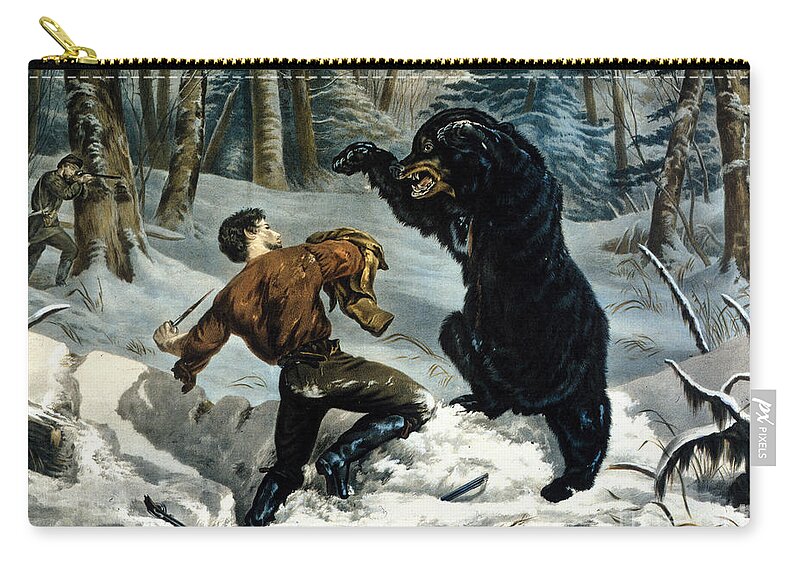
While scouting ahead of his group, Glass encountered a grizzly bear—an encounter that quickly turned violent.
Accounts agree that the attack was severe. Glass was mauled, suffering deep wounds, a broken leg, and injuries that should have been fatal. The men traveling with him believed he wouldn’t survive.
Two members of the party were assigned to stay behind with him until he died and then bury him.
Instead, they left.
Whether out of fear, impatience, or desperation, the two men eventually abandoned Glass—taking his rifle and gear with them—leaving him alone in the wilderness with catastrophic injuries.
The Survival Story
This is where the legend takes off.
According to historical accounts, Glass regained consciousness and realized he had been left for dead. What followed is one of the most famous survival stories ever told.
He is said to have:
- Set his own broken leg
- Wrapped himself in a bear hide
- Survived on berries, roots, and scavenged meat
- Crawled and drifted hundreds of miles toward safety
Some versions claim he traveled nearly 200 miles to reach Fort Kiowa.
It’s a story that sounds almost impossible.
And that’s where the questions begin.
Where the Story Gets Blurry
There’s little doubt that Hugh Glass survived a bear attack and endured an incredible journey back to civilization.
But the details? That’s where things get murky.
Most of the accounts were written after the fact, often based on secondhand information. Distances were likely exaggerated, timelines compressed, and conditions dramatized.
For example:
- The exact distance he traveled is debated
- The severity of some injuries may have been embellished
- The timeline of his recovery isn’t fully clear
Even the idea that he crawled the entire distance is questioned. It’s far more likely he alternated between crawling, walking, and floating along waterways when possible.
And then there’s the revenge narrative.
The Revenge That Never Fully Came
One of the most popular elements of the Hugh Glass story is his supposed quest for revenge against the men who left him behind.
It’s a powerful storyline—and one heavily emphasized in modern retellings.
But in reality, when Glass eventually caught up with one of the men, he didn’t kill him.
Historical accounts suggest he either forgave him or chose not to take revenge due to the man’s young age and the circumstances. The second man had already joined the military, making retaliation more complicated.
That’s a far less dramatic ending—but a much more human one.
How the Legend Grew
So how did Hugh Glass go from frontiersman to near-mythical survival icon?
It comes down to storytelling.
The American frontier was filled with danger, uncertainty, and larger-than-life characters. Stories like Glass’s were passed down, retold, and often enhanced with each telling.
By the time they were written and published, they had taken on a life of their own.
Then came modern media.
Films like The Revenant brought the story to a global audience—but also amplified its most extreme elements. The result is a version of Hugh Glass that feels almost superhuman.
The Reality Is Still Incredible
Even stripped of exaggeration, Hugh Glass’s story is remarkable.
A man survives a brutal grizzly attack, is abandoned in the wilderness, and still manages to make his way back to civilization. That alone is enough to cement his place in history.
He doesn’t need to have crawled 200 miles nonstop or lived purely on instinct and revenge to be extraordinary.
In fact, the real story—flawed, uncertain, and human—is arguably more compelling.
The Bottom Line
Hugh Glass wasn’t a superhero.
He was a trapper who endured something most people wouldn’t survive—and found a way to keep going.
Over time, his story grew, shaped by storytellers, writers, and filmmakers into something bigger than the man himself.
But at its core, the legend exists for a reason.
Because even without the exaggeration, what Hugh Glass went through is hard to comprehend.
And sometimes, the truth is more than enough.