
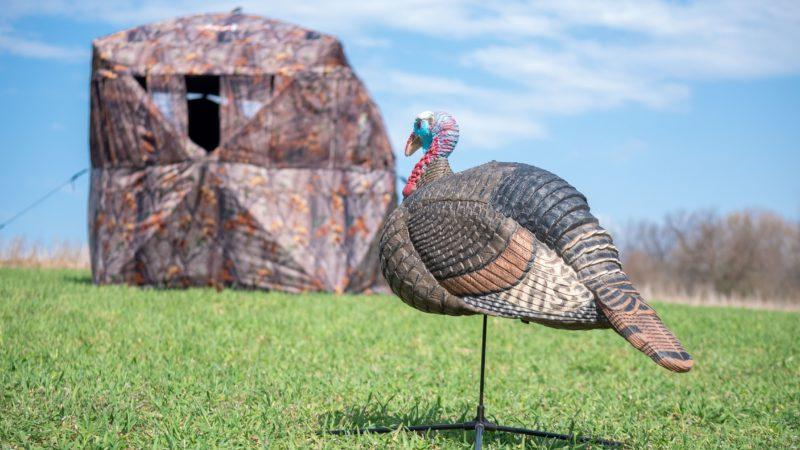
Utah Hunter Shot After Decoy Turkey Mistaken for Real Bird

A turkey hunting trip in Utah turned dangerous when a hunter was shot after another individual reportedly mistook a decoy for a real bird—an incident that’s now being used as a stark reminder about the importance of target identification in the field.
Incident Highlights Ongoing Safety Concern
According to the Utah Division of Wildlife Resources, the shooting occurred during spring turkey season when a hunter approached what he believed to be a live turkey but was actually a decoy placed by another hunter.
The individual fired, striking a nearby hunter who was positioned behind or near the decoy setup.
Officials reported that the victim sustained injuries but survived, and the incident is under investigation.
How Decoys Can Create Dangerous Situations
Turkey decoys are one of the most effective tools in hunting—but they can also create risk when used improperly.
Decoys are designed to:
- Mimic real birds
- Attract gobblers into range
- Create realistic hunting scenarios
But that realism can work both ways.
According to safety guidance from the National Wild Turkey Federation, decoys can sometimes be mistaken by other hunters, particularly in areas with higher hunting pressure.
That’s why proper placement and awareness are critical.
The Most Common Mistake: Shooting Without Full Identification
At the center of most hunting accidents is one issue—failure to properly identify the target.
According to the International Hunter Education Association, positively identifying your target and what lies beyond it is one of the fundamental rules of firearm safety.
In turkey hunting, that means:
- Never shooting at movement alone
- Never firing at sounds
- Confirming the entire target—not just part of it
In this case, investigators believe the shooter acted on visual assumption rather than full confirmation.
Why Turkey Hunting Is Unique
Turkey hunting presents different challenges than other types of hunting.
Hunters often:
- Sit concealed at ground level
- Use calls to attract birds
- Rely on decoys to create setups
These factors increase the chance of another hunter approaching the same area—especially if they hear calling.
According to the Utah Division of Wildlife Resources, many turkey hunting incidents occur when one hunter stalks what they believe is a bird, only to encounter another hunter instead.
Safety Practices That Could Prevent Incidents
Wildlife agencies consistently emphasize a few key safety practices:
- Avoid wearing red, white, or blue (colors of a turkey’s head)
- Set up with a large tree or barrier behind you
- Place decoys where you can clearly see approaching movement
- Never stalk a turkey call or decoy
According to the National Wild Turkey Federation, hunters should assume any sound or decoy could be another hunter and act accordingly.
A Reminder for Hunters Heading Into the Field
Incidents like this are rare—but they do happen, and they’re almost always preventable.
According to the Utah Division of Wildlife Resources, hunting remains one of the safest outdoor activities when proper safety rules are followed—but those rules must be taken seriously.
The Bottom Line
The Utah shooting serves as a reminder that even experienced hunters can make critical mistakes if they rush a shot or fail to fully identify their target.
According to the Utah Division of Wildlife Resources, the National Wild Turkey Federation, and the International Hunter Education Association, the responsibility always falls on the shooter to know exactly what they’re aiming at.
Because in the field, there’s no room for assumptions—only certainty.