
Where You Aim Matters Most: The Best Shot Placement for Whitetail Deer

Ask ten hunters what caliber they use, and you’ll get ten different answers.
Ask experienced hunters what actually matters most…
And they’ll all tell you the same thing:
Shot placement.
Because no matter what rifle, bow, or bullet you’re using, where that shot lands determines everything—how quickly the animal goes down, how easy the recovery is, and how ethical the hunt truly is.
The Vital Zone: What You’re Actually Aiming For
When it comes to whitetail deer, the goal is simple:
Hit the vitals.
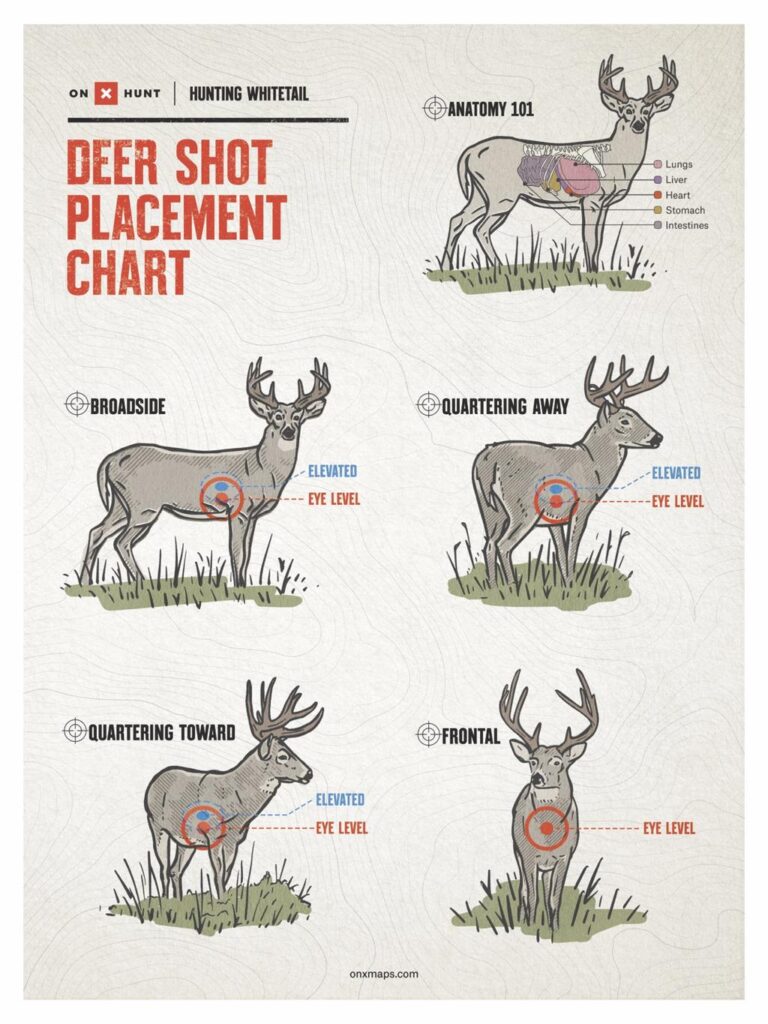
That means targeting the heart and lungs—located just behind the front shoulder. This area provides the largest effective kill zone while still allowing for some margin of error under real hunting conditions.
A properly placed shot here:
- Disrupts oxygen flow
- Causes rapid blood loss
- Leads to a quick, humane kill
It’s the highest percentage shot for a reason.
The Broadside Shot: The Gold Standard
If you could design the perfect shot opportunity, this would be it.
The deer is standing broadside, exposing the full rib cage and vital area. From this angle, you have a clear path into the heart and lungs without having to navigate heavy bone.
Aim just behind the shoulder, about one-third of the way up from the belly.
This placement allows the bullet or arrow to:
- Pass through both lungs
- Possibly clip the heart
- Create a strong blood trail
It’s reliable, effective, and the shot most hunters should wait for.
The Quartering Away Shot: Highly Effective
Many experienced hunters actually prefer this angle.
When a deer is quartering away, the vitals are still exposed—but the angle allows for deeper penetration through the body cavity. This can result in more internal damage and often a quicker recovery.
The key is to aim for the far-side shoulder, visualizing the bullet or arrow’s path through the animal.
Done correctly, this shot:
- Travels through both lungs
- Often exits through bone
- Leaves an excellent blood trail
It’s an extremely effective shot—but it requires understanding angles.
Shots to Avoid
Not every opportunity is a good one.
And knowing when not to shoot is just as important as knowing where to aim.
Head Shots
They might seem like a quick, clean option—but they’re high risk. The brain is a small target, and even a slight miss can result in a wounded animal with a low chance of recovery.
Neck Shots
While they can be effective in the right hands, they require precision. Miss the spine or major vessels, and you’re likely dealing with a wounded deer that can travel long distances.
Quartering Toward
This is one of the most dangerous shots to attempt. The angle forces the bullet through heavy bone before reaching vital organs, reducing penetration and increasing the chance of poor outcomes.
When in doubt:
Wait.
Bullet Placement vs Bullet Choice
Hunters often spend hours debating calibers, bullet weights, and ballistics.
But here’s the truth:
A perfectly placed shot from a moderate cartridge will outperform a poorly placed shot from the most powerful rifle every time.
Cartridges like:
- .270 Winchester
- .308 Winchester
- 6.5 Creedmoor
…have built their reputation not because they’re extreme—but because they consistently deliver when paired with good shot placement.
Understanding Real-World Conditions
Shot placement isn’t just about knowing anatomy.
It’s about executing under pressure.
In the field, you’re dealing with:
- Adrenaline
- Movement
- Low light
- Unsteady shooting positions
That’s why practicing realistic scenarios matters.
Shooting from a bench is one thing.
Making a clean shot from a blind, stand, or uneven terrain is something else entirely.
Tracking Starts With the Shot
Where you hit the deer determines what happens next.
A good lung or heart shot typically results in:
- A short run (often under 100 yards)
- A visible blood trail
- A quick recovery
Poor placement can mean:
- Little to no blood
- Long tracking jobs
- Lost animals
And no hunter wants that.
Patience Is Part of Shot Placement
One of the hardest lessons in hunting is learning to wait.
The buck steps out. Your heart starts pounding. You want to take the shot before the opportunity disappears.
But rushing leads to mistakes.
The best hunters aren’t the fastest shooters.
They’re the most patient.
They wait for the right angle, the right position, and the right moment.
The Bottom Line
The best shot placement for whitetail deer isn’t complicated.
It’s disciplined.
Aim for the vitals. Wait for the right angle. Don’t force a shot that isn’t there.
Because at the end of the day…
It’s not about the caliber in your rifle.
It’s about where that bullet lands.