
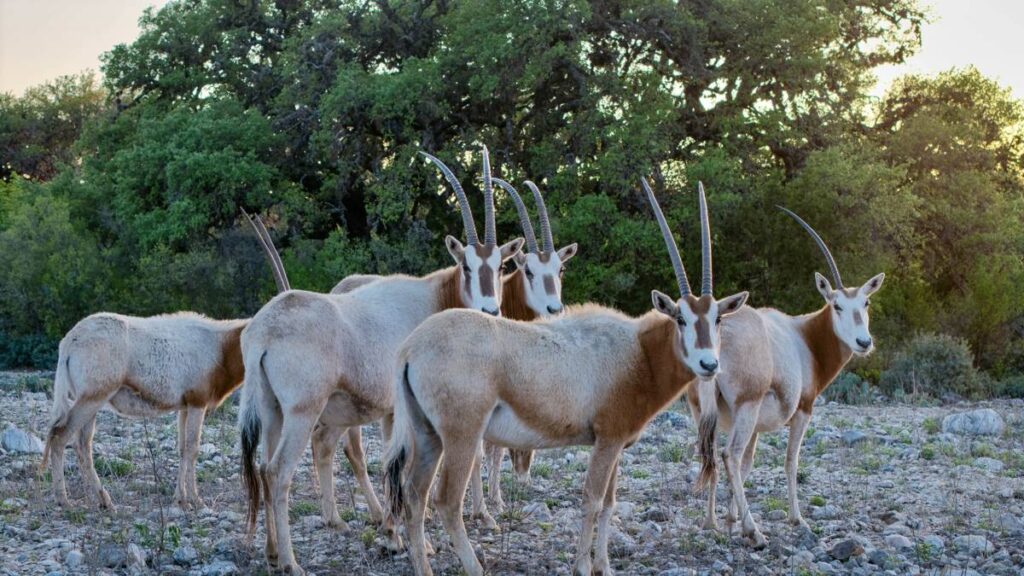
From the Brink to the Brush Country: How Texas Exotic Hunting Ranches Helped Save the Scimitar-Horned Oryx
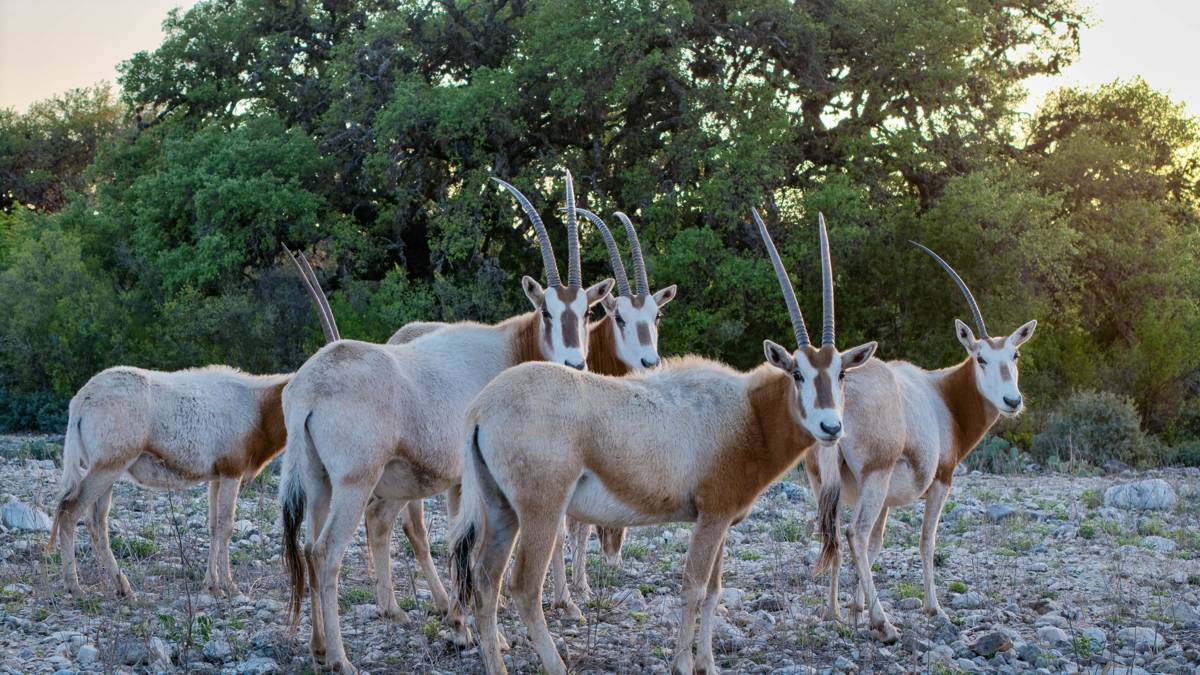
For decades, the scimitar-horned oryx was considered a ghost of the desert—an animal that once roamed North Africa in massive herds, only to be pushed to the edge of extinction by overhunting, habitat loss, and political instability.
By the early 2000s, the species was declared extinct in the wild.
But what many people don’t realize is this: while the oryx disappeared from its native range, it didn’t disappear entirely.
In fact, thousands of miles away, a surprising ally was quietly keeping the species alive—and eventually helping bring it back.
An Unlikely Lifeline in Texas
Across Texas, exotic game ranches have long managed species from around the world. What started as private collections and hunting operations evolved into something far more significant over time.
Among those species was the scimitar-horned oryx.
Imported decades ago, these animals adapted well to the hot, dry environments of Texas ranch country. Large tracts of land, consistent management, and controlled breeding programs allowed populations to grow steadily—far beyond what existed in the wild.
While the species was disappearing in Africa, it was thriving in Texas.
Today, conservation groups estimate that a significant portion of the global scimitar oryx population has, at one point, existed on private lands in the United States—particularly in Texas.
The Role of Hunting in Conservation
At first glance, it may seem contradictory: how can hunting help save a species?
But in the case of the scimitar-horned oryx, hunting created economic value for the animal. That value gave landowners a reason to protect, breed, and manage healthy populations.
Instead of being seen as expendable wildlife, the oryx became an asset worth preserving.
Ranchers invested in:
- Habitat management
- Predator control
- Veterinary care
- Selective breeding
All of this contributed to stable—and often growing—herds.
Without that incentive, it’s unlikely the species would have maintained such strong numbers outside of captivity.
From Texas Back to Africa
The real turning point came when conservation organizations began looking for ways to reintroduce the oryx into its native habitat.
Captive populations—many of them tied to U.S. ranches and breeding programs—became the foundation for those efforts.
Through coordinated programs involving international conservation groups, governments, and wildlife organizations, scimitar-horned oryx were reintroduced into protected areas in countries like Chad.
According to the International Union for Conservation of Nature, the species has now moved from “Extinct in the Wild” to “Endangered,” a major milestone in conservation.
That shift didn’t happen by accident—it was built on decades of population stability outside their native range.
A Controversial Success Story
Not everyone agrees with the role exotic hunting ranches have played.
Critics argue that high-fence hunting operations prioritize profit over true conservation and question whether animals raised in managed environments can fully represent wild populations.
Supporters, on the other hand, point to results.
Without private landowners maintaining viable populations, the scimitar-horned oryx may have disappeared entirely. Instead, there are now thousands of animals, with growing reintroduced herds in Africa.
It’s a rare example where conservation didn’t follow a traditional path—and still worked.
What It Means for the Future
The story of the scimitar-horned oryx challenges the way people think about wildlife conservation.
It shows that:
- Conservation doesn’t always happen in national parks
- Private land can play a major role in species survival
- Economic incentives can sometimes align with preservation
It also raises bigger questions.
Could similar models help other endangered species? Should private ranches play a larger role in conservation efforts moving forward?
There’s no one-size-fits-all answer—but the oryx proves that unconventional approaches can make a real impact.
The Bottom Line
The scimitar-horned oryx went from roaming the deserts of North Africa… to vanishing from the wild… to being rebuilt, in part, on Texas soil.
It’s not the conservation story most people expect—but it’s one of the most fascinating.
Because in this case, the path back from extinction didn’t start in Africa.
It started on a ranch.